
Termite treatment lasts anywhere from a few months to several decades, and the type of treatment you choose is what decides where you land on that range.
At Inside & Out Pest Services, we get this question daily from Jacksonville homeowners comparing Trelona and Termidor, or wondering if a treatment from a past owner is still doing its job. Here’s what to expect from each method, and how Northeast Florida’s climate factors in.
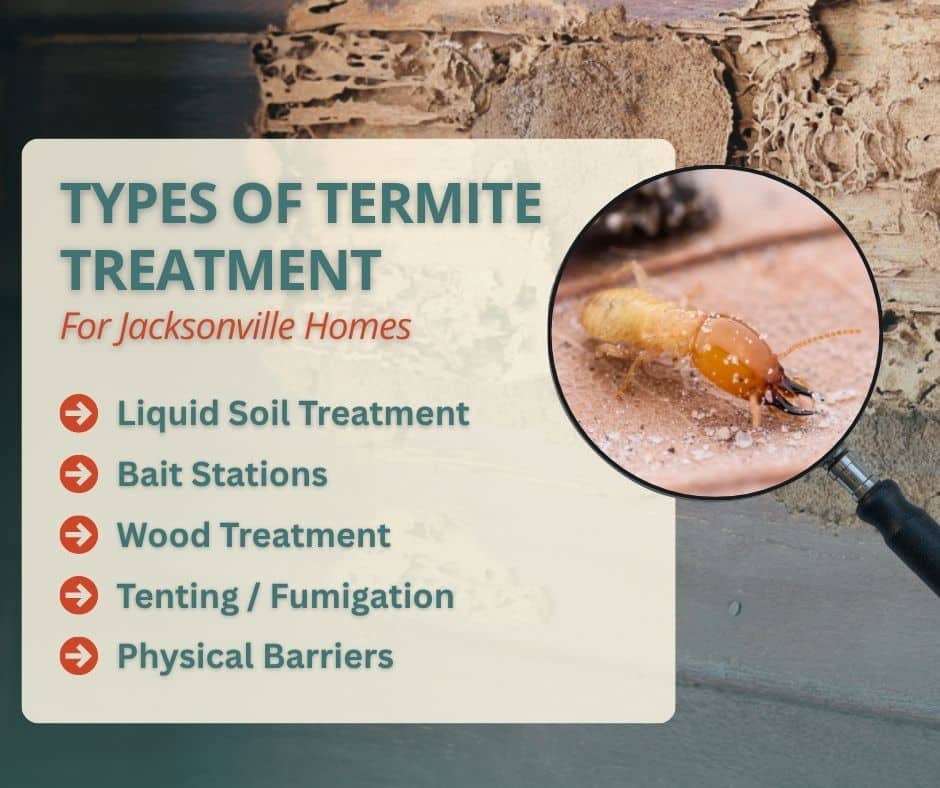
Types of Treatment for Jacksonville Homes
Jacksonville’s warm, humid climate creates a year-round threat from termites, making a solid prevention strategy essential for protecting your property. Different treatment methods vary significantly in how they work, how they are applied, and how many years of protection they deliver. Here is a quick breakdown of how the most common options compare.
Quick answer: Liquid treatments last 5–10 years, bait stations need refreshing about once a year, wood treatments can last decades, and physical barriers can outlast them all.
| Treatment type | Typical lifespan | Best for |
| Liquid (soil) | 5–10 years | Existing homes, active infestations |
| Bait stations | Ongoing, with refresh every 3–12 months | Early detection, colony elimination |
| Wood treatment | A few years to decades | Exposed wood, new construction |
| Tenting (fumigation) | No residual protection | Severe, whole-structure infestations |
| Physical barriers | 30+ years | New construction only |
How Long Does Liquid Termite Treatment Last?
Liquid (soil) termite treatment typically lasts 5 to 10 years. It’s the most common method for existing homes.
A licensed technician digs a trench around your home’s foundation and applies a termiticide barrier into the soil. Termites that try to cross the treated zone die, or they turn back before reaching the structure.
The EPA requires termiticide labels to prove at least 5 years of protection.
So 5 years is really the floor, not the ceiling. Newer non-repellent products, like Termidor, tend to land on the higher end of that range. Termites can’t detect the treated soil, so they walk through it and carry the residue back to the colony. That spreads the effect to the whole colony, not just the individuals that make direct contact.
Three things shorten this window:
- Disturbed soil from digging, landscaping, or new construction near the treated perimeter
- Heavy rainfall or irrigation that washes out the barrier over time
- Gaps in coverage from an incomplete original application
How Long Do Termite Bait Stations Last?
Termite bait stations protect your home for as long as you actively maintain them. Each station typically needs new bait every 3 to 12 months. Bait systems, like Trelona, work differently than liquid barriers. Stations go in the ground around your property and hold a slow-acting bait. Foraging termites carry that bait back to the colony and spread it to other termites in the process.
Unlike a one-time soil application, bait stations run as a monitoring program. A technician checks them on a set schedule, often quarterly, and replaces bait as termites use it up. Skip the monitoring, and the protection lapses, even though the stations stay in the ground. That ongoing check-in also catches new termite activity early, often before it reaches the structure at all.
How Long Does Wood Treatment Last?
Wood treatment can last anywhere from a few years to multiple decades. It depends on whether it’s a borate application on exposed wood or a preventative treatment during construction. Borate-based products soak into the wood fibers and make them toxic to termites on contact.
Builders can apply this treatment during construction, and it can then last the lifetime of that wood, as long as the wood stays dry. Technicians can also apply it later to an existing infestation or as a supplement to soil treatment, but moisture and weather will wear it down faster in that case.
How Long Do Tenting and Physical Barriers Last?
Tenting (fumigation) kills existing termites but leaves zero residual protection. Physical barriers, like stainless steel mesh or crushed stone, can last 30 years or more. These two methods sit at opposite ends of the spectrum.
- Tenting seals your home and fills it with gas that eliminates every termite inside within a day or two. It works well against an active infestation, but the moment the tent comes off, your home has no ongoing barrier against a new colony moving in.
- Physical barriers work the opposite way. Builders install them during construction, using materials termites can’t chew through or tunnel around. They don’t break down chemically, so they can outlast every other method on this list. They just can’t treat an infestation that’s already inside.
What Affects Your Termite Treatment in Jacksonville
Jacksonville homes see both subterranean and drywood termites more often than homes in drier climates. Heavy seasonal rain can also wash out or shift soil treatments faster than in regions with less rainfall. That’s one reason annual inspections matter more here than in milder climates.
A few things specific to our area affect how long your treatment holds up:
| Factor | Effect on treatment lifespan |
| Clay-rich, moisture-retentive soil | Can accelerate breakdown of liquid barriers |
| Year-round termite activity | Shortens the “off season” other regions get for reinfestation risk |
| Frequent heavy rain/irrigation | Can wash out shallow or incomplete soil applications |
| Annual WDO inspections | Catch barrier gaps and bait station lapses before damage occurs |
No matter which method protects your home, an annual inspection keeps that protection valid. It’s the only way to confirm the barrier, bait stations, or wood treatment is still doing its job.
Related Questions to Explore
- Do I need a termite inspection every year? Yes. Most treatment warranties require an annual inspection to stay valid. It’s also the fastest way to catch a gap in your barrier, or a bait station that needs attention, before termites reach the structure.
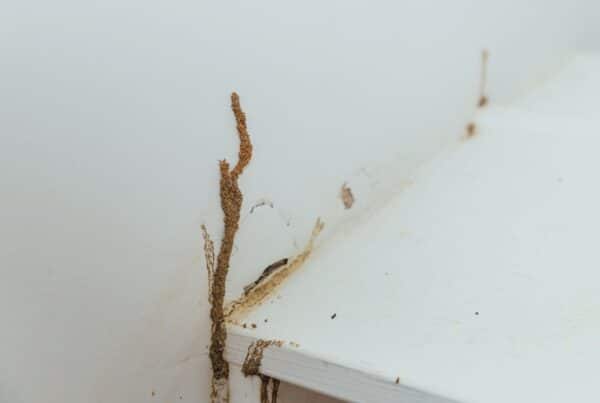
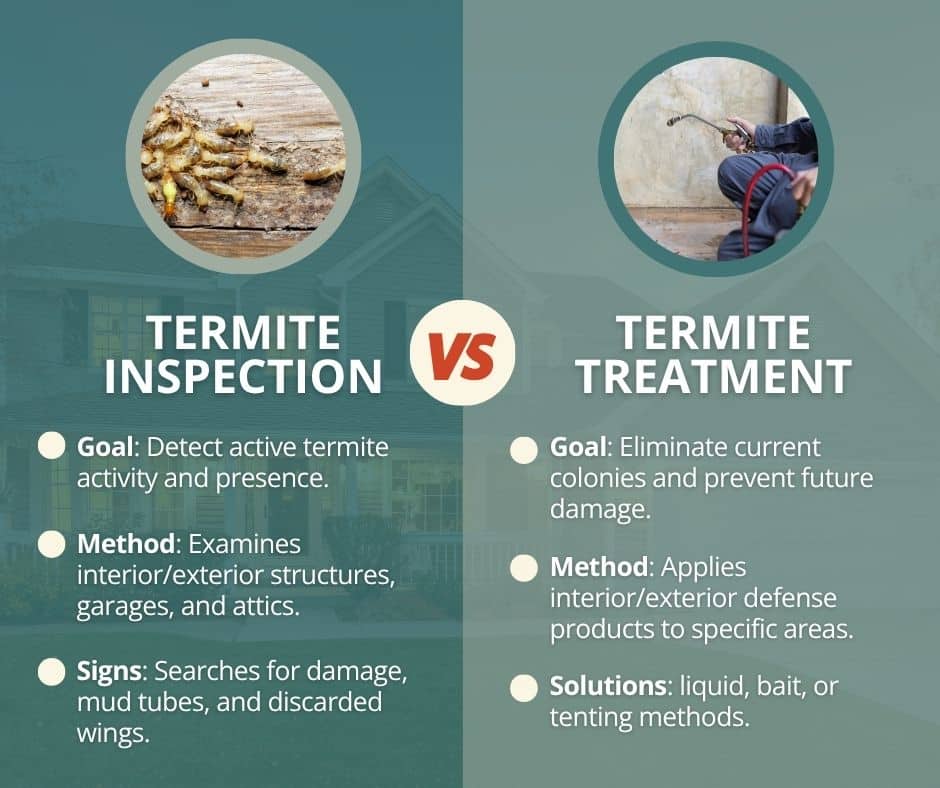
- How do I know if my termite treatment is still working? Look for mud tubes on the foundation, discarded wings near windows or doors, or soft, hollow-sounding wood. None of these are guaranteed to show up before damage starts. That’s why a professional inspection matters more than a visual check alone.
- What’s the difference between Trelona and Termidor? Trelona is a bait station system that targets the whole colony over time through ongoing monitoring. Termidor is a liquid, non-repellent termiticide applied as a barrier around the foundation. We use both at Inside & Out Pest Services and recommend one based on your home’s layout, soil, and termite pressure.
- Can termites come back after treatment? Yes, especially after fumigation, since it offers no residual protection. A disturbed liquid barrier from digging or landscaping can also let termites back in. That’s part of why understanding the difference between carpenter ants and termites matters, too. Homeowners sometimes mistake a returning termite problem for a different pest, or the reverse.
- How much does termite treatment cost? Cost depends on your home’s size, the treatment type, and how bad any existing infestation is. A termite inspection is the first step toward an accurate quote for your situation.
When to Call a Professional
If you notice mud tubes, discarded wings, or termites with wings inside your home, call a licensed technician right away rather than waiting for the next scheduled inspection. Termites cause damage from the inside out, so visible signs usually mean the problem has been active for a while already. The same goes if you’re just not sure what you’re looking at.
Our team can tell you whether it’s termites or something else, like carpenter ants or winged ants, then recommend the right treatment for your home and soil conditions. Inside & Out Pest Services has served Jacksonville, St. Augustine, and the surrounding Northeast Florida area for over 20 years. We back every termite treatment with our satisfaction guarantee.
Conclusion
Termite treatment lifespan comes down to the method you choose.
Key takeaways:
- Liquid barriers protect for 5 to 10 years
- Bait stations work for as long as you keep monitoring them
- Wood treatments can last decades if they stay dry
- Physical barriers, installed during construction, can outlast every other method
- An annual inspection is what confirms your protection is still active, no matter which method you have
If it’s been more than a year since your last termite inspection, or you’re not sure what treatment your home currently has, reach out to Inside & Out Pest Services.
We’ll walk you through what’s protecting your home right now and what, if anything, needs attention. Call us or schedule online today!