
Mosquitoes don’t need much to start a population boom. A bottle cap’s worth of stagnant water and a few warm days are all it takes for mosquito breeding to begin, and in Jacksonville, those conditions show up earlier and last longer than most homeowners expect.
By the time you’re dealing with mosquito bites on the patio, the breeding cycle has already been running for weeks. The key to mosquito control isn’t just treating the insects you see. It’s eliminating the breeding grounds where they reproduce before the population takes off.
Here’s where mosquitoes lay their eggs most often around Jacksonville homes, why it matters, and what you can do about it.
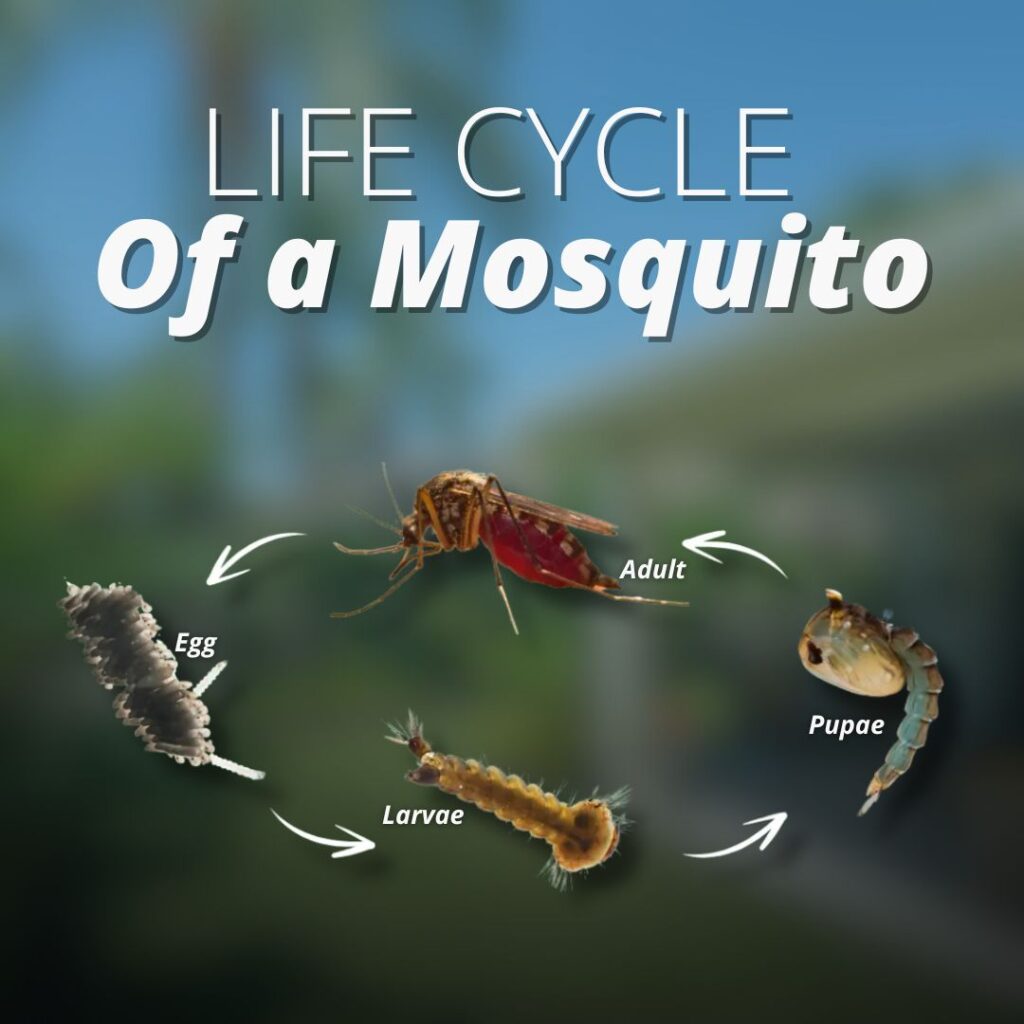
The Mosquito Life Cycle Moves Fast
Female mosquitoes seek a blood meal after mating, then lay their eggs in or near stagnant water. Some species lay eggs directly on the water’s surface, while others deposit them on damp surfaces just above the waterline, where they wait for the next rain to hatch.
Once eggs are in water, mosquito larvae can emerge in as little as 24 to 48 hours. In high temperatures, the full life cycle from egg to biting adult can be completed in as few as 7 to 10 days.
In Florida’s warm, humid climate, that lifecycle runs nearly year-round, with peak activity from late spring through early fall.
| Stage | Duration | Where It Happens |
| Egg | 24–48 hours to hatch | On or near stagnant water |
| Larva (mosquito larvae feed in water) | 4–7 days | In standing water |
| Pupa (pupal stage before emergence) | 1–3 days | In standing water |
| Adult (exits pupal case on water’s surface) | Emerges and begins feeding | Around your yard and home |
That timeline means a small pocket of standing water in your yard can produce a new generation of mosquitoes every week or two if left undisturbed.
Common Mosquito Breeding Grounds Around Your Home
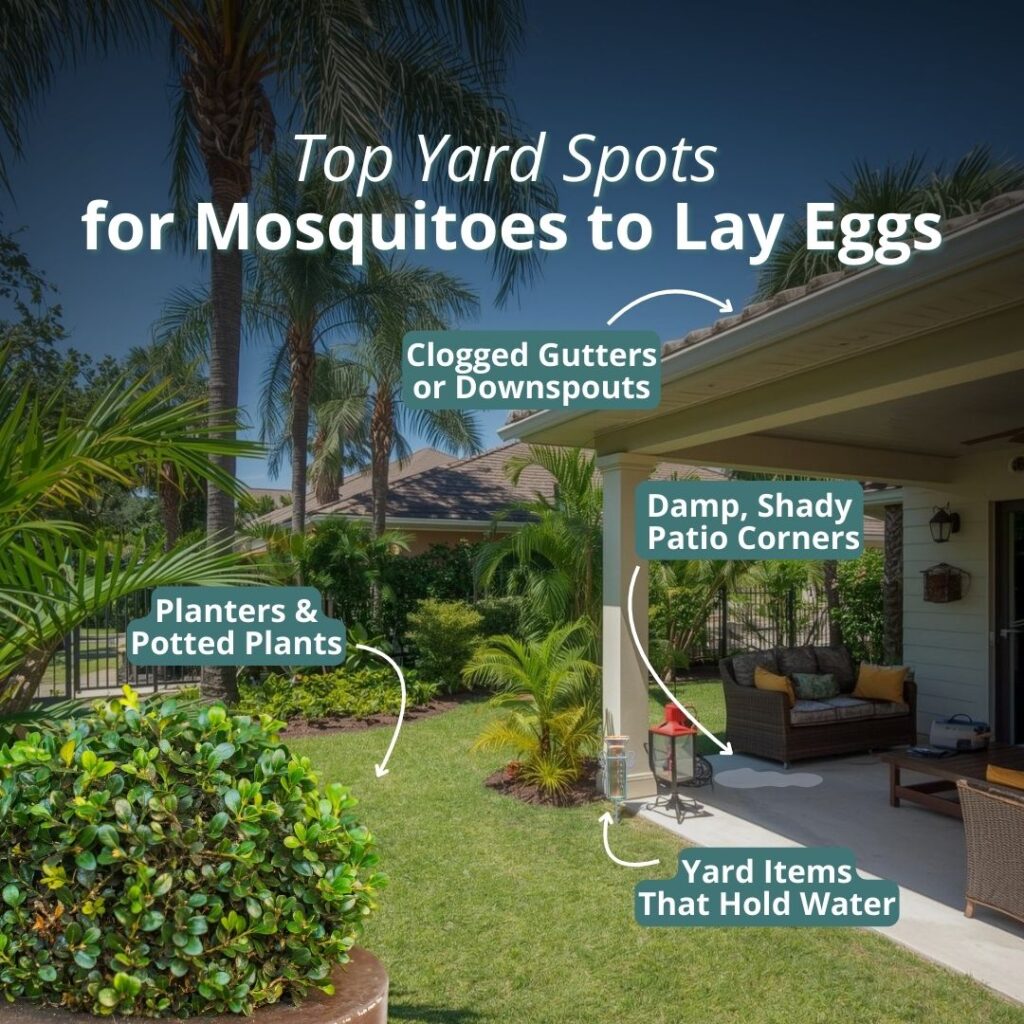
Most mosquito breeding doesn’t happen in ponds or swamps. It happens in overlooked spots around your own property. Here are the breeding sites that cause the most problems for Jacksonville homeowners.
Gutters and Downspouts
Clogged gutters are one of the top mosquito breeding grounds in residential areas. When leaves and debris block the flow, water pools and sits for days. That’s more than enough time for mosquitoes to lay their eggs and for larvae to develop.
Downspout extensions and splash blocks that don’t drain properly create the same problem. Any spot where stagnant water collects after a rain is a potential breeding ground.
Plant Saucers, Bird Baths, and Garden Features
The trays under potted plants are one of the easiest breeding sites to miss. After rain or watering, they hold just enough still water for eggs to be laid within hours.
Bird baths, ornamental ponds, and even bromeliads that collect water in their leaves are common habitats for mosquito larvae in Northeast Florida landscaping.
Containers and Yard Items That Collect Water
Mosquitoes aren’t picky insects. Any container that catches and holds water is a potential breeding ground.
- Old tires and tire swings
- Kids’ toys, wagons, and play equipment
- Buckets, watering cans, and wheelbarrows
- Rain barrels without proper screening
- Tarps and pool covers that sag and collect rainwater
- Trash can lids, recycling bins, and other containers
After every rain, walk your property and flip, dump, or drain anything holding water. This one habit can eliminate more mosquito breeding grounds than most people realize.
Drainage Problems and Low Spots
Properties in Jacksonville’s low-lying areas, particularly near the St. Johns River, the Intracoastal, and parts of the Southside and Arlington, are prone to standing water after storms.
French drains that have silted up, depressions in the lawn, and areas with poor yard grading can all hold stagnant water long enough for mosquitoes to reproduce.
These aren’t always obvious. Sometimes the standing water is in a shady corner, behind the shed, or along the fence line where you rarely walk. These shaded areas double as hiding spots and resting habitats for adult mosquitoes during the day.
Neglected Structures and Hardscapes
Forgotten areas of your property can quietly sustain mosquito larvae for months.
| Spot | Why It’s a Problem |
| Unused pools or hot tubs | Large volume of stagnant water, often shaded |
| Boat covers and trailer beds | Collect rainwater in folds and crevices |
| AC drip lines | Steady moisture creates small pools near the unit |
| Tree holes and stumps | Natural habitats that hold water after rain |
| Pond edges with still water | Shallow, stagnant margins where mosquitoes lay eggs |
These spots are easy to miss during your regular yard routine, but many species of mosquitoes find them quickly.
Why Proactive Mosquito Control Matters in Jacksonville
Timing is everything. Because the life cycle is so short, waiting until you have a visible problem means the population has already multiplied several times over.
Jacksonville’s climate makes this especially challenging. Warm temperatures, regular afternoon rain, and high humidity create ideal mosquito habitats from roughly March through November.
Humidity helps keep adult mosquitoes from dehydrating, which is why they thrive here. In mild winters, the cycle may not fully stop at all.
Early intervention means getting ahead of the curve: eliminate breeding sites on your property and have a professional mosquito control plan in place before peak season.
- Reactive approach: Treating adult mosquitoes after the population has exploded. Numbers drop temporarily, but new adults keep emerging from existing breeding sites.
- Proactive approach: Eliminating breeding grounds and applying targeted treatments early to disrupt the life cycle before the population builds momentum.
What Can You Do to Prevent Mosquitoes?
Homeowners can make a real dent in mosquito breeding ahead of peak season with consistent habits.
- Walk your property after every rain and dump or drain anything holding stagnant water
- Clean gutters regularly, especially during Jacksonville’s heavy spring and summer rain
- Change the bird bath water at least twice a week to prevent mosquito larvae from developing
- Store containers upside down or under cover when not in use, including buckets, pots, and yard tools
- Eliminate standing water in low spots, clogged drains, and anywhere water sits for more than a few days
- Keep grass and landscaping trimmed to reduce hiding spots and resting habitats where adult mosquitoes spend the day
These steps reduce available breeding sites and make professional treatments significantly more effective when it’s time to control mosquitoes across your full property.
Other Questions Homeowners Ask
Are mosquitoes actually dangerous?
Yes. Mosquitoes carry diseases like West Nile virus, dengue, and Eastern equine encephalitis. Many species found in Jacksonville can transmit diseases to humans and other animals. Reducing breeding around your home is a health consideration, not just a comfort one.
When does mosquito season start in Jacksonville?
Activity typically picks up in March and runs through November, with the heaviest populations from May through September. In mild years, some mosquito breeding continues through winter.
Is pest control safe for kids and pets?
Professional treatments are formulated and applied with household safety in mind. Your technician can walk you through what’s being used, where it’s applied, and any precautions to take after service.
What pests are most common in Jacksonville?
Jacksonville’s warm, humid climate supports year-round pest activity. Mosquitoes, ants, roaches, termites, and spiders are among the most common household pests in Northeast Florida, and many of them thrive in the same damp, sheltered conditions.
When to Call a Professional
At-home prevention habits go a long way, but there are situations where professional mosquito control makes a clear difference.
Consider calling a pro when:
- You’ve been consistent with prevention, and still have heavy mosquito activity
- Your property backs up to a wooded area, marsh, retention pond, or waterway
- You want a seasonal plan that stays ahead of the breeding cycle year-round
- You’re planning outdoor events and want reliable, targeted treatment
A professional service can identify breeding sites and mosquito habitats you may not see, apply targeted treatments that address both larvae and adult mosquitoes, and keep your property protected throughout Jacksonville’s long mosquito season.
Conclusion
Mosquito breeding is easier to prevent than it is to reverse once a population is established. The earlier you start to eliminate breeding grounds and control mosquitoes on your property, the more manageable the season becomes.
If you’re in Jacksonville, St. Augustine, or anywhere in Northeast Florida and want a proactive approach to mosquito control this season, the team at Inside & Out Pest Services can help.
We’ll assess your property, identify breeding risks, and put a plan in place that keeps mosquitoes from taking over your outdoor space.