
Most people know fleas are small. What surprises them is just how much evidence a flea infestation leaves behind once it gets going, and how easy it is to miss the early signs until the problem is already out of hand.
In Jacksonville and across Northeast Florida, fleas are a year-round concern. The warm, humid climate keeps flea populations active in ways that pet owners in colder states simply do not deal with.
If you have pets, spend time outdoors, or have had wildlife near your property, knowing how fleas look and what an infestation looks like to the human eye is one of the most practical things you can know.
What Does a Flea Look Like to the Human Eye?
Fleas are visible to the naked eye, but just barely. Adult fleas are typically 1.5 to 3 millimeters long, dark brown to reddish-brown, and wingless. They have a flattened, hunched shape with six legs, and their hard, shiny exoskeleton is covered in backward-pointing bristles that help anchor them to a host.
Their powerful hind legs allow them to jump up to seven inches vertically, which is roughly 100 times their body length. In motion, fleas are fast-moving insects that appear as fleeting specks. You are more likely to catch one jumping than crawling.
Against a light surface in bright light, they are visible. On dark fabric or carpet, they are very easy to miss. Dog fleas and cat fleas are the species most commonly found in Florida homes. Despite their names, both will infest either type of pet, and both will bite humans.
Human fleas exist as a species, but are far less common in residential settings than cat fleas, which are by far the most widespread in Northeast Florida.

The Flea Life Cycle and Why It Matters
Understanding the flea life cycle explains why infestations are so hard to catch early and so stubborn to eliminate.
Adult fleas make up only about 5% of a flea population at any given time. The other 95% are eggs, larvae, and pupae living in your home rather than on your pet.
| Stage | What It Looks Like | Where It Lives |
| Eggs | Tiny, light-colored, oval-shaped, 0.5mm | Falls off the host into carpet, pet bedding, and floor cracks |
| Larvae | Pale, worm-like, 2 to 5mm | Carpet fibers, baseboards, and upholstered furniture |
| Pupae | Sticky cocoon covered in debris | Blends into flooring, dormant up to six months |
| Adults | Dark brown, jumping, 1.5 to 3mm | On a host or jumping between surfaces |
A female flea can start laying eggs within 24 hours of infesting a host and can lay up to 50 eggs per day. Those eggs are small, light-colored, and oval-shaped, and they fall off the pet almost immediately into the surrounding environment.
Flea larvae hatch within 2 to 21 days and feed on organic debris, including adult flea feces, before developing into pupae. Flea pupae can remain dormant in their cocoons for several days to up to six months before emerging as adults.
This is why infestations seem to return after treatment. Pupae that survive hatch weeks later, producing a new wave of adults even after the visible population appeared to be gone.
Signs of a Flea Infestation to Look For
You may not spot fleas directly at first, but an active infestation leaves clear evidence across your home and pets.
Signs on Your Pets
- Flea dirt: Looks like tiny dark specks similar to ground black pepper, found on your pet’s skin, in their bedding, and on furniture where they rest. To confirm, place a few specks on a damp white paper towel. If they spread reddish-brown, which is digested blood, it confirms fleas are present.
- Pet behavior changes: Pets with fleas scratch, lick, and bite constantly, especially around the neck, base of the tail, and belly. Ongoing activity causes hair loss, small scabs, and red patches on a pet’s skin. Cats often over-groom to the point of visible bald spots.
- Flea bites on people: Small, red, itchy welts in clusters or lines, most often around the ankles and lower legs. In Florida, bites year-round are a reliable sign that fleas live in the home environment, not just on pets.
Signs in Your Home
- Seeing fleas jump: Put on white socks and walk slowly across the carpet where pets spend time. Watch for tiny dark specks jumping onto the fabric. Spot fleas this way early, and you have a much better chance of treating before the population grows.
- Eggs and larvae in the environment: Flea eggs accumulate where pets sleep and rest. Larvae avoid light and burrow into carpet fibers and floor cracks. If you pull back carpet near a pet bed or baseboard and see fine white debris or small worm-like movement, the infestation is already well established below the surface.
Where Do Fleas Hide in a Florida Home?
Fleas in your home concentrate in specific zones based on where pets spend time and where conditions allow the life cycle to continue undisturbed.
Indoors, fleas live and hide in:
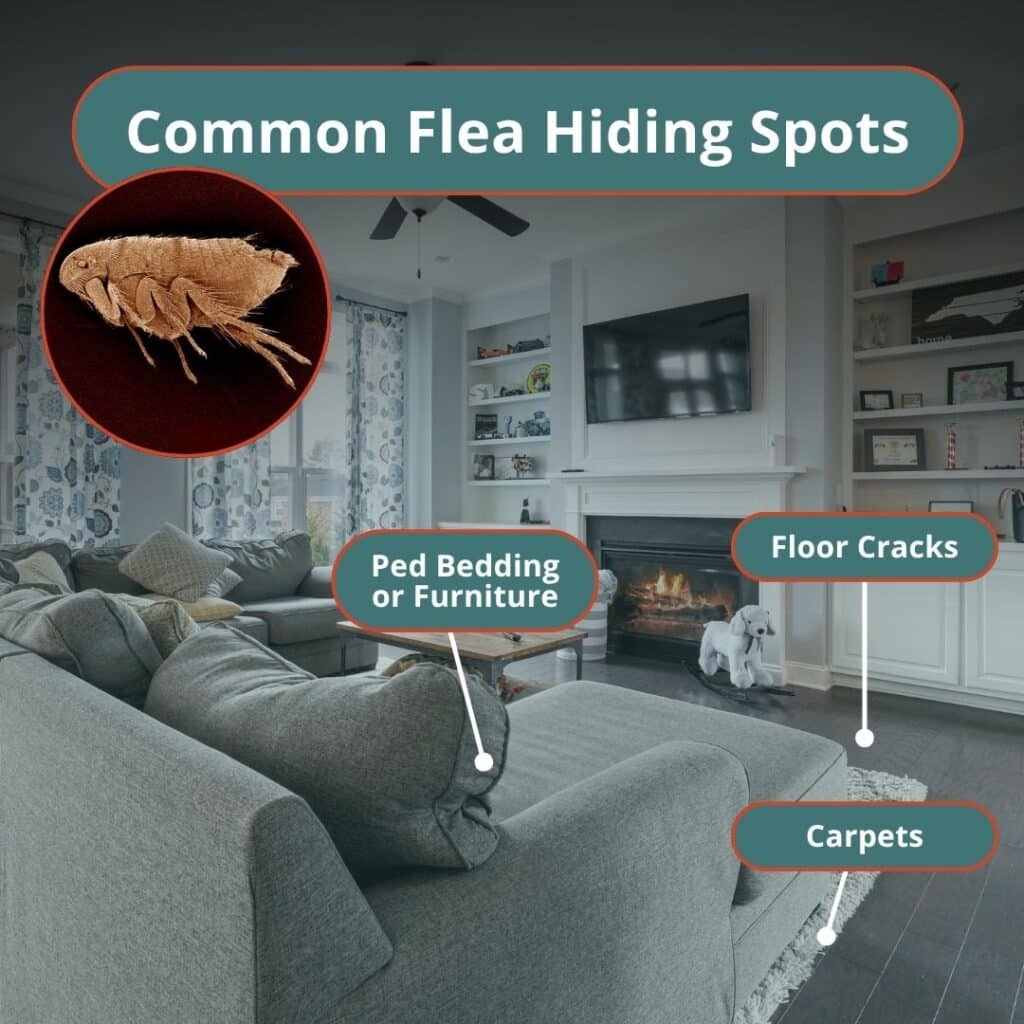
- Carpet fibers in rooms where pets spend the most time
- Pet bedding, crate interiors, and the surrounding floor area
- Upholstered furniture, particularly cushion seams and underneath
- Baseboards, floor cracks, and gaps between hardwood planks
- Area rugs in living rooms and bedrooms
Outdoors, fleas are commonly found in:
- Shaded, moist areas where pets rest or play
- Under decks, porches, and dense low shrubs
- Tall grass and leaf litter along yard edges
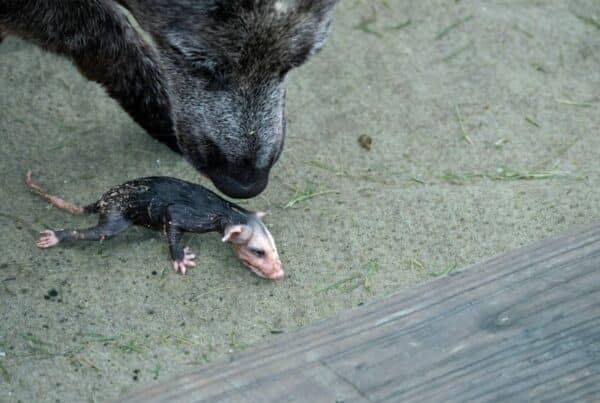
- Areas with regular wildlife activity, including opossums and raccoons
In Jacksonville and the surrounding areas, outdoor reintroduction is a consistent challenge. Even after being treated indoors, pets that go outside can pick up new fleas and restart the cycle.
Fleas can also be transferred into homes by humans via clothing and shoes, meaning homes without pets are not immune. Wildlife passing through residential yards across Duval, St. Johns, and Clay counties is one of the most overlooked sources of ongoing flea pressure.
Fleas vs. Other Small Biting Pests
Not every small biting or jumping pest is a flea. Here are the most common look-alikes and how to tell them apart:
- Bed bugs: Roughly the size of an apple seed, oval-shaped, and do not jump. Both fleas and bed bugs bite humans for blood meals and leave itchy red bumps, but bed bugs are found in mattresses and furniture seams rather than on pets or in carpet. Fleas are typically smaller than bed bugs and move far faster.
- Ticks: Ticks are arachnids with eight legs, while fleas have six legs, making them different types of pests entirely. Flea bites tend to leave itchy red bumps clustered on the lower legs, while tick bites are more likely to produce a rash, and the tick may latch on for days.
- Both are known to transmit diseases, though fleas are more commonly associated with tapeworms and secondary infections.
- Mites: Much smaller than fleas and typically require magnification. Usually linked to specific animal hosts rather than dogs and cats.
Other Recommended Questions
Can fleas infest a home without pets?
Yes. Fleas can live for several months without a host and can be transferred into a home by humans via clothing and shoes, or introduced by wildlife activity near or under the structure.
What pests are most commonly found in Jacksonville homes?
Northeast Florida’s warm, humid climate supports year-round activity from cockroaches, mosquitoes, ants, rodents, and termites alongside fleas. Most of these pests stay active longer here than in other parts of the country.
How do rodents connect to other pest problems in the home?
Rodents entering a home through gaps in foundations, rooflines, or utility penetrations can introduce secondary pest problems, including fleas directly. A flea problem that keeps returning without a clear source is worth investigating for rodent activity.
What do termites and fleas have in common from a treatment standpoint?
Both require addressing the full population, not just what is visible. Termites work inside walls and wood structures out of sight, while flea eggs and pupae develop out of reach in carpet and flooring. In both cases, treating only the adults or the surface level leaves the underlying population intact.
When to Call a Professional
Flea infestations are one of the harder pest problems to eliminate without professional help because adults keep emerging for weeks if eggs and pupae are not addressed alongside the visible population.
Call a professional when:
- Flea dirt is showing up in multiple rooms
- People in the household are getting bitten regularly
- DIY treatment efforts have not resolved the problem within two to three weeks
- You have multiple pets or a large home with higher reinfestation risk
- Outdoor wildlife activity may be contributing to the problem
At Inside & Out Pest Services, our flea treatment plan addresses every stage of the life cycle across Jacksonville, Ponte Vedra Beach, St. Augustine, Orange Park, and surrounding communities in Northeast Florida.
Conclusion
A flea infestation is not just a few bugs on your pet. It is eggs in your carpet, larvae in your baseboards, and pupae waiting to hatch long after you think the problem is handled. Knowing how fleas look, where they hide, and what signs to act quickly on is the difference between catching it early and dealing with a full household problem.
If you are seeing the signs or want to know for certain what you are dealing with, contact our team today.