
You spray the yard before a cookout. Then, you dump every bucket, pot, and bird bath you can find. You light the citronella torches and hope for the best. And by the time the sun goes down, the mosquitoes are back like nothing happened.
For homeowners in Jacksonville and across Northeast Florida, that is not just a bad night outside. It is the result of a fundamental mismatch: consumer-level tools being used against a pest that demands a professional-grade response.
Understanding why that gap exists, and what professional mosquito control actually delivers, is what this post is about.
Florida’s Unique Mosquito Struggle
Most states get a break. A hard frost thins out mosquito populations each fall, giving homeowners a few months of relief before populations rebuild in spring. Florida does not work that way.
In Northeast Florida, mosquitoes are biologically active for most of the year. The combination of warm temperatures, high humidity, and frequent rainfall creates near-ideal conditions for continuous breeding. There is no meaningful seasonal reset, which means mosquito season builds on itself rather than starting from scratch each year.
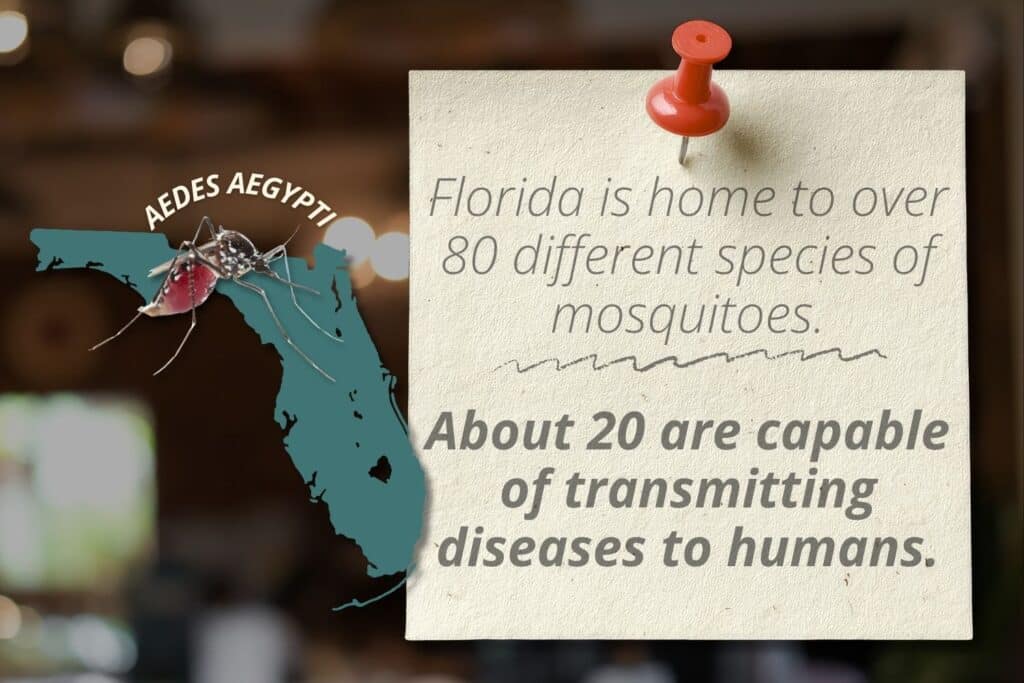
Florida is also home to multiple mosquito species with different behaviors, peak activity windows, and breeding preferences. Some are primarily daytime biters. Others concentrate activity at dawn and dusk.
Some breed in standing water you can easily spot; others breed in damp soil, tree canopies, and organic debris that most homeowners would never think to inspect. A single product or approach does not address all of them equally, and that is where DIY begins to break down.
The Health Stakes Are Real
Mosquitoes in Florida are not just a nuisance. They are an active public health concern, and the Florida Department of Health tracks mosquito-borne illness activity statewide on a weekly basis throughout the year.
According to Florida DOH surveillance data, 18 human cases of West Nile Virus were reported in Florida in 2024, including cases in Duval County. In 2023, the state recorded over 186 cases of locally acquired dengue fever across multiple counties.
Eastern Equine Encephalitis, another mosquito-borne virus present in Florida, carries a human mortality rate of 30 to 60 percent according to public health authorities, though confirmed human cases remain rare.
Duval County, where Jacksonville is located, has appeared in Florida DOH mosquito-borne illness advisories in multiple recent years. These are not abstract risks. They reflect the reality of living in a climate where mosquito populations stay active long enough to create genuine, recurring exposure windows for residents and their pets.
Mosquitoes can also transmit heartworm to dogs and cats through a single bite, a risk that tends to get overlooked but matters for any household with animals spending time outside.
Why DIY Mosquito Control Falls Short
Consumer mosquito products are not without merit. Removing standing water helps. Personal repellents reduce individual exposure. A yard spray before a backyard event can take the edge off for a few hours.
The problem is not that these things do nothing. It is that none of them address the underlying problem, and in Florida’s conditions, the underlying problem does not wait.
Here is where common DIY approaches consistently fall short:
- Yard sprays and foggers knock down adult mosquitoes in treated areas, but residual effectiveness is minimal, and coverage is rarely thorough enough to reach every resting site on the property. Once the product breaks down, which happens quickly in Florida’s heat and humidity, the population rebounds.
- Citronella candles and torches create a mild deterrent in a very small radius. They do not reduce the mosquito population on your property in any meaningful way.
- Personal repellents work at the individual level but do nothing to address breeding activity, population size, or the conditions driving mosquitoes to your yard in the first place.
- Standing water removal is genuinely useful, and something professionals will also recommend, but it only covers what you can see. Mosquitoes breed in clogged gutters, tree holes, dense ground cover, and low spots that hold moisture for days after rain, none of which make it onto most homeowners’ inspection lists.
What none of these approaches include is larvicidal treatment, residual barrier application, or a systematic inspection to identify where breeding is actually concentrated on your specific property. That combination is what separates a professional program from a reactive one.
How the Breeding Cycle Is the Real Problem
Even when DIY products are applied correctly, they are working against the wrong part of the mosquito life cycle.
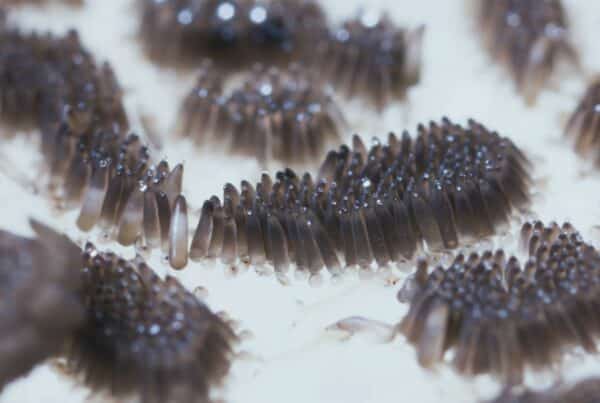
Mosquitoes go through four life stages: egg, larva, pupa, and adult.
The first three all occur in or near water. According to the CDC and EPA, effective mosquito management requires intervening across multiple life stages, not just targeting the adults that are already biting.
Larvicidal treatment applied directly to breeding sites stops mosquitoes before they ever emerge as adults. Consumer-grade products are generally not formulated for this kind of application, and even where retail larvicides exist, using them effectively requires knowing where breeding is actually concentrated, which takes a trained inspection to find.
Florida properties add another layer of difficulty. Breeding sites that would be obvious in a drier climate are not obvious here. Gutters that drain slowly after heavy rain, low spots in the yard that hold moisture for days, tree holes, bromeliads, dense ground cover, and ornamental water features all serve as productive breeding habitats.
Finding and treating all of them is not something a consumer spray program accomplishes reliably.
What Professional Mosquito Control Delivers
Professional mosquito treatment is a fundamentally different approach than anything available over the counter. The difference is not just product strength. It is the methodology.
Inspection and Source Identification
Before any product is applied, a trained technician inspects the property to locate mosquito resting areas and active breeding sites.
This includes areas most homeowners would not think to check: the underside of dense shrubs, drainage areas, soil that stays damp after rain, gutters, and ornamental water features. What gets found during the inspection shapes the entire treatment plan for that specific property.
Treatment at Multiple Life Stages
Professional treatment addresses mosquitoes at both the larval and adult stages. Larvicide is applied to identified breeding sites to stop mosquitoes before they emerge.
Adult mosquitoes are treated separately through residual barrier applications to the resting areas they use during the day, typically the underside of leaves, dense shrub lines, and shaded structures. This residual protection persists between service visits in a way that consumer sprays do not replicate.
Recurring Service to Control the Lifecycle
In Florida’s climate, mosquitoes can complete a full breeding cycle in as little as a week to ten days under favorable conditions. A single professional treatment meaningfully reduces the population, but mosquitoes recolonize from adjacent areas quickly.
Recurring service, scheduled at intervals that reflect local breeding activity, is what produces sustained population reduction rather than short-term knockdown.
This is the structural difference between professional mosquito control and applying a yard spray before a backyard event.

What You Can Do Between Professional Treatments
Professional mosquito control works best when homeowners support it with consistent habits between visits. These are not substitutes for professional service, but they make professional treatment more effective and help extend results.
- Remove standing water from any container that holds it after rain: pots, buckets, tarps, gutters, pet dishes, and anywhere else water collects and sits
- Keep shrubs and ground cover trimmed, since mosquitoes shelter in dense, shaded vegetation during the heat of the day
- Monitor low spots in the yard that tend to hold moisture after heavy rain
- Keep ornamental water features circulating, since still water is a productive breeding habitat even in small volumes
These are the same recommendations a technician will make after inspecting your property. Maintaining them between service visits reduces available breeding habitat and helps your treatment program go further.
When to Call For Professional Mosquito Control
If mosquitoes are making your outdoor space genuinely unusable, if you notice biting activity throughout the day rather than just at dawn and dusk, or if consumer approaches have not produced meaningful improvement, those are signs the problem has outgrown what DIY can solve.
Professional mosquito control is worth planning proactively if you have outdoor pets, children who spend time in the yard, or property features like water features, drainage areas, or dense vegetation that create consistent breeding pressure.
In Florida’s long active season, getting ahead of the problem is more effective than reacting once populations are already established.
Related Questions
Where do mosquitoes typically breed on residential properties in Florida?
Breeding sites are often smaller and less obvious than most homeowners expect. Clogged gutters, tree holes, dense ground cover that holds moisture, ornamental water features, and any container that catches rainwater can all support a breeding cycle. In Florida’s climate, even a small amount of standing water left undisturbed for a few days is enough.
How quickly do mosquito populations rebuild after treatment?
In Florida’s warm, humid conditions, mosquitoes can complete a breeding cycle in as little as a week to ten days. This is why recurring professional service outperforms one-time treatments for sustained population control.
Do mosquitoes pose health risks to pets as well as people?
Yes. Mosquitoes transmit heartworm to dogs and cats, a serious and potentially fatal condition if untreated. Reducing mosquito activity around your property reduces exposure risk for your pets alongside your family.
What other pests are active year-round in Northeast Florida?
Termites, roaches, and rodents all thrive in the same conditions that drive year-round mosquito pressure. Many homeowners address mosquito control as part of a broader pest management program that covers multiple pest types under a single recurring service.
Are certain times of year worse for mosquitoes in Jacksonville?
Peak activity runs through the warmer, rainier months, typically late spring through early fall. But Northeast Florida does not really have an off-season for mosquitoes, which is why year-round management tends to outperform treatment that only runs seasonally.
Conclusion
In a state where mosquitoes breed continuously, carry documented disease risk, and exploit breeding sites that most homeowners cannot fully identify on their own, the ceiling on DIY control is real and consistently lower than most people expect.
Professional mosquito control closes that gap with the inspection, life-stage treatment, and recurring service schedule that sustained population reduction requires.
Inside & Out Pest Services provides professional mosquito control for homeowners across Jacksonville and the surrounding areas of Northeast Florida. If mosquitoes are making your yard unusable, request a service today.