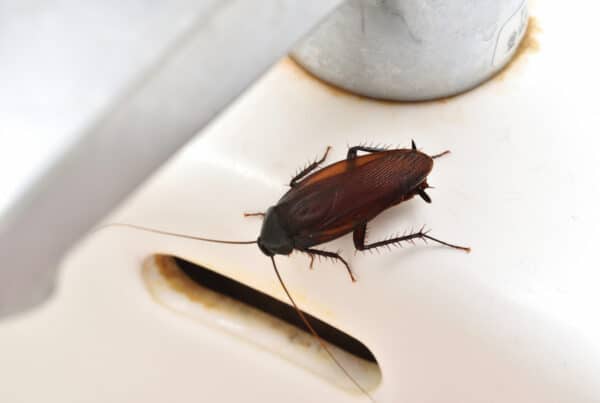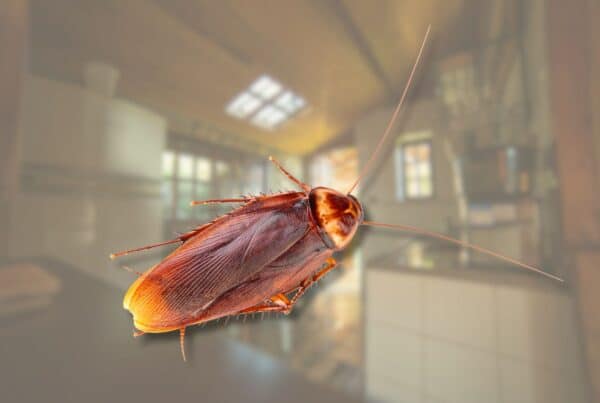

If you’ve ever flipped on a kitchen light and watched small, light-brown roaches scatter into the cracks, you’ve probably met the German cockroach. They’re not the big “palmetto bugs” that wander in from the yard (here’s how to tell Florida roaches and look-alike bugs apart). These live indoors, close to food and water, and they breed fast.
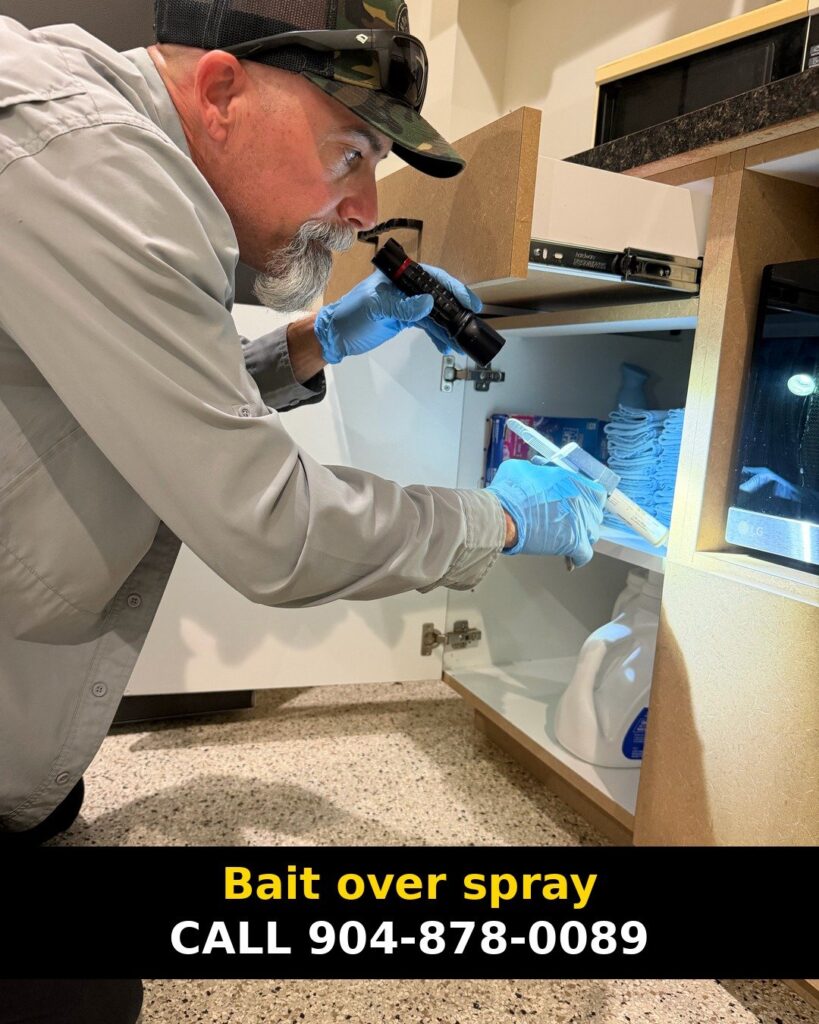
Mike, our pest control manager, was out at a local business break room this month treating exactly that. Here’s what he did, where he looked, and why bait is the main tool we reach for.
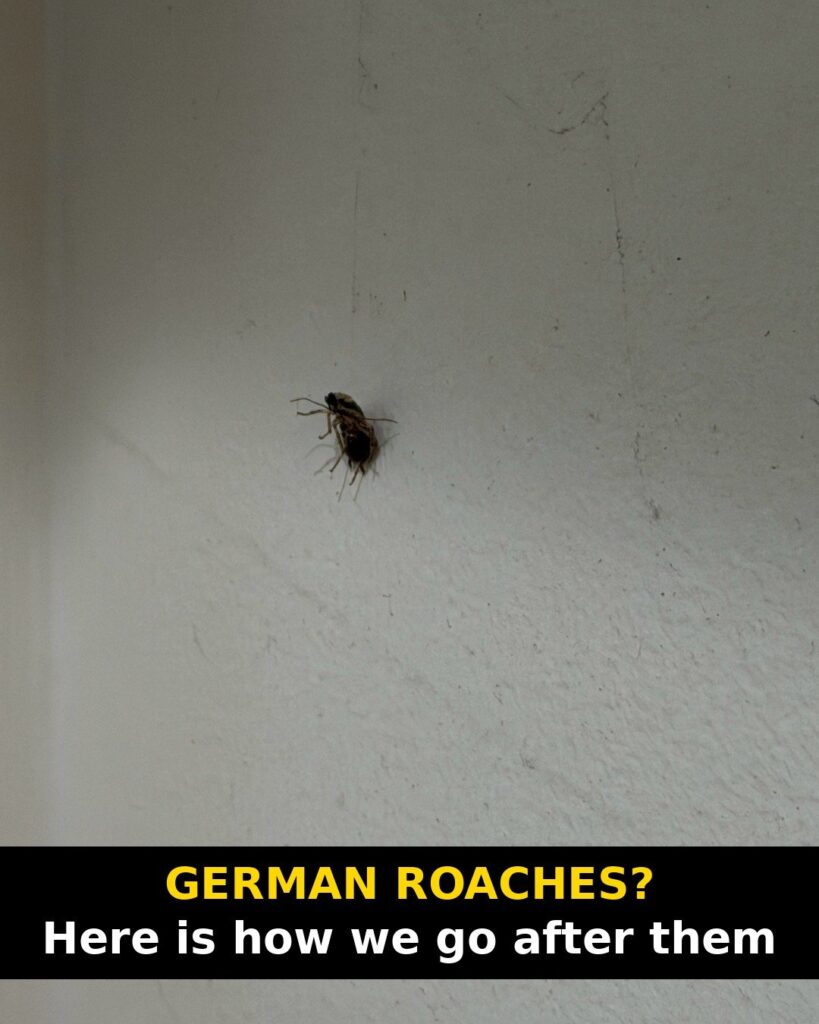
Where German roaches hide
German roaches spend most of the day packed into tight, dark, warm spots, and they come out to feed when it’s quiet. In a kitchen or break room, Mike works with a flashlight and checks:
- Cracks and gaps along cabinets and countertops
- Electrical outlets and cover plates
- Inside cabinets and drawers, including the hinges and corners
- Under the sink, around the pipes and the back wall
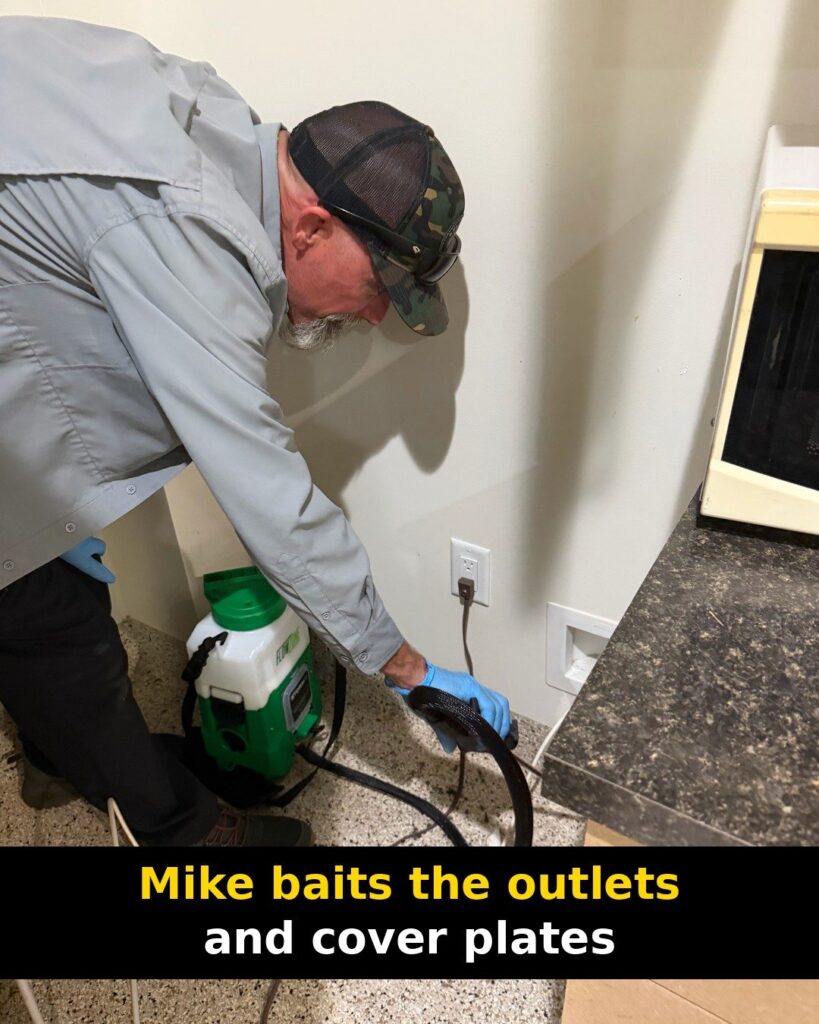
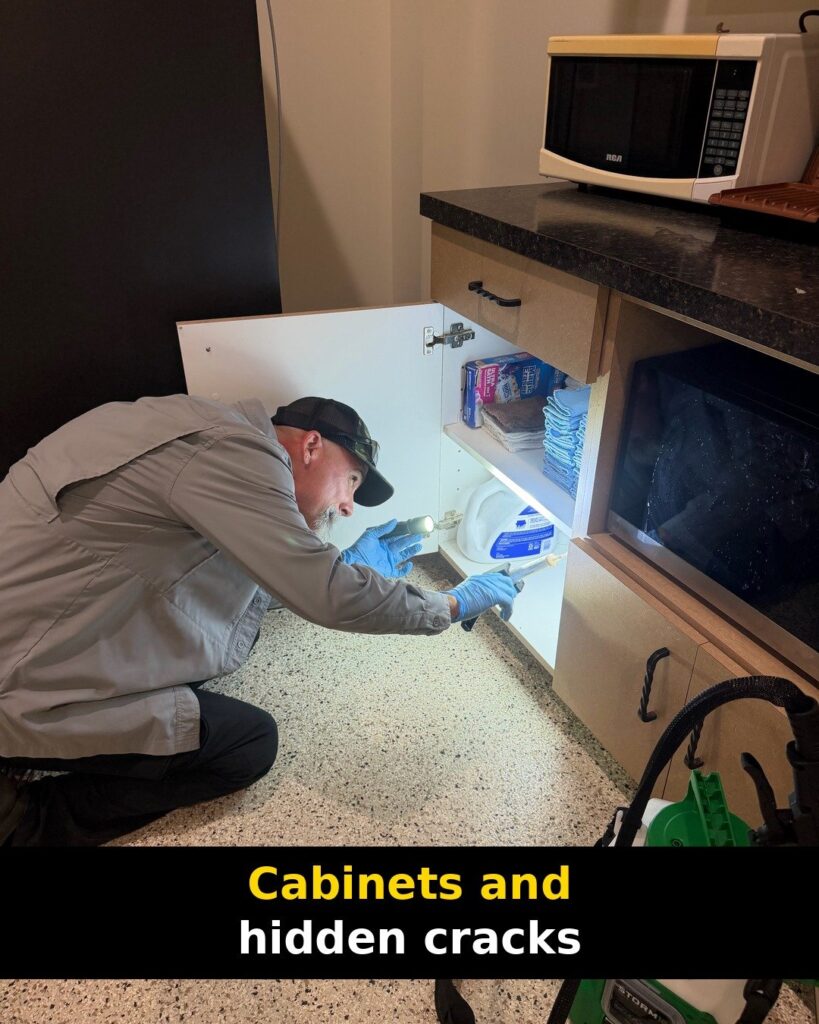
Those are the spots a can of spray from the store never reaches.
Why bait works better than spray
This isn’t just our preference. University extension researchers say the same thing.
Bait spreads to the ones you never see. Roaches that eat the bait go back to their hiding spots, and other roaches pick it up from their droppings and bodies. That matters because the youngest nymphs often don’t leave their hiding places to feed, so a surface spray can miss them entirely (UF/IFAS, Assessment-Based Pest Management of German Cockroaches).
Spray can make baits stop working. Many insecticides repel roaches. NC State Extension warns against spraying where baits are placed because the spray can keep roaches from eating the bait, and says sprays and aerosols give quick knockdown but can scatter roaches to other parts of the building (NC State Extension, German Cockroach Surveillance and Management).
Bug bombs don’t get into the cracks. The same NC State guide says total-release foggers fail to reach the crevices where German roaches live and breed, and they come with fire and exposure risks.
Store-bought products often fall short. A 2025 study in the Journal of Economic Entomology found the over-the-counter baits and sprays it tested performed poorly against German roaches collected from real infestations, and the authors concluded those products are likely ineffective at controlling infestations in homes (Journal of Economic Entomology, 2025). Kitchen-pantry tricks don’t fare better either; see Does Baking Soda Kill Roaches? and What Smells Keep Roaches Away?
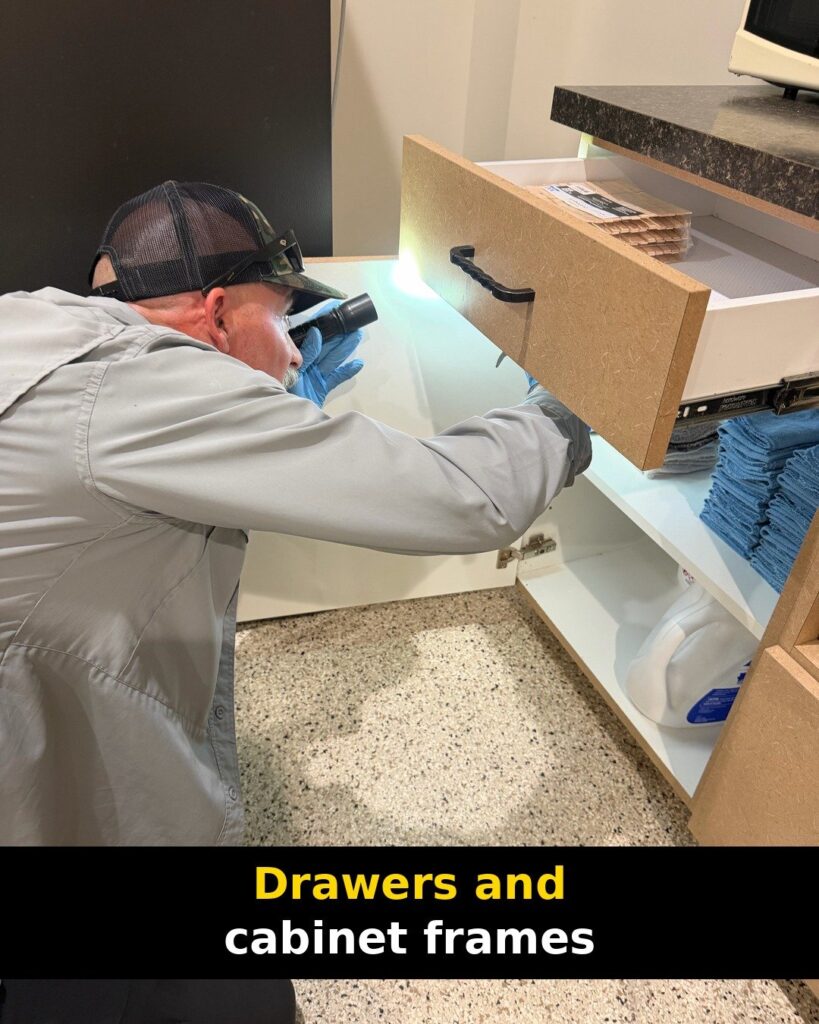
How we place it
Small placements in a lot of spots beat a big glob in a few. NC State recommends pea-size placements right where roaches hide, which also keeps bait away from kids and pets. UF/IFAS adds that baiting should follow what an inspection actually finds, not a fixed calendar. That’s why Mike starts with the flashlight before he ever opens the bait.
What you can do between visits
- Skip the spray cans. If you’ve had bait placed, spraying over it can undo the work.
- Cut off food and water. Wipe crumbs and grease, don’t leave dishes or pet food out overnight, and fix drips under the sink.
- Seal what you can. UF/IFAS recommends caulking gaps around sinks, cabinets and wall-mounted fixtures to take away hiding spots.
- Watch for new arrivals. German roaches often ride in on boxes, grocery bags and used appliances. Here’s how roaches get into your house.
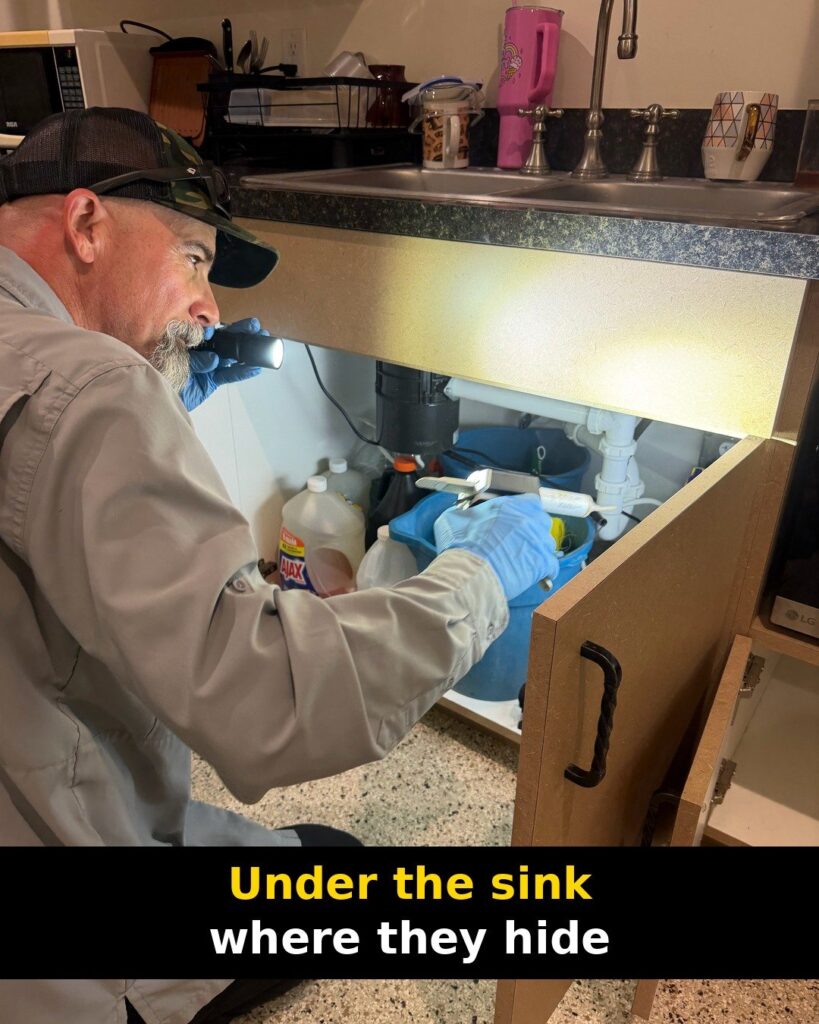
Seeing roaches at home or at work?
German roaches don’t go away on their own, and the longer they hide, the bigger the problem gets. We treat homes and businesses across Jacksonville and St. Johns County, including Fruit Cove, Nocatee, Ponte Vedra and St. Augustine.
Call Inside & Out Pest Services at 904-878-0089 or get a free estimate online.