
Baking soda can kill a roach, but only if the roach eats enough of it, and it will not wipe out an infestation. That’s the short answer our technicians at Inside & Out Pest Services give Jacksonville homeowners who ask about the baking soda and sugar trick.
It’s cheap, it’s already in your pantry, and it feels safer than a spray. The problem is that roaches don’t like the taste, the mix only reaches the few that feed on it, and the rest keep breeding in your walls.
Below, we’ll cover how the trick is supposed to work, how to try it the right way, which DIY methods do a better job, and why professional treatment beats all of them.
Does Baking Soda Kill Roaches?
Yes, sometimes, but not reliably. Baking soda (sodium bicarbonate) has to be swallowed to do anything. Sprinkling it on the floor or along baseboards does nothing on contact.
Roaches also avoid plain baking soda. In one pest technician’s side-by-side test, a dish of baking soda sat untouched for days. Even entomologists are skeptical. One university insect expert told a national home publication that baking soda “won’t do anything” to cockroaches.
So you get two problems at once:
- Roaches won’t eat it alone. You have to hide it in a food they want, like sugar or flour.
- The kill rate is low. Only roaches that eat a large enough dose die, and they may take a day or more to do it.
For a roach you spotted once, baking soda bait is a harmless experiment. For roaches you see every night, it’s the wrong tool.
How Baking Soda Is Supposed to Kill Roaches
The theory is simple. When a roach eats baking soda, it reacts with the acid in the roach’s gut and releases gas. That gas builds pressure inside the insect’s body and disrupts its digestion until it dies.
Some sources claim it also dries roaches out. Either way, the key word is eat. Baking soda is not a contact poison like boric acid, and it has no residual effect. Once the bait is gone or swept up, protection ends.
That’s why you’ll see every baking soda recipe paired with an attractant. Sugar is the most common one because roaches are drawn to sweets. Flour works too, since roaches also go after starches.
How to Use Baking Soda and Sugar Bait
If you want to try it, set it up where roaches will find it. Here’s the method most homeowners use:
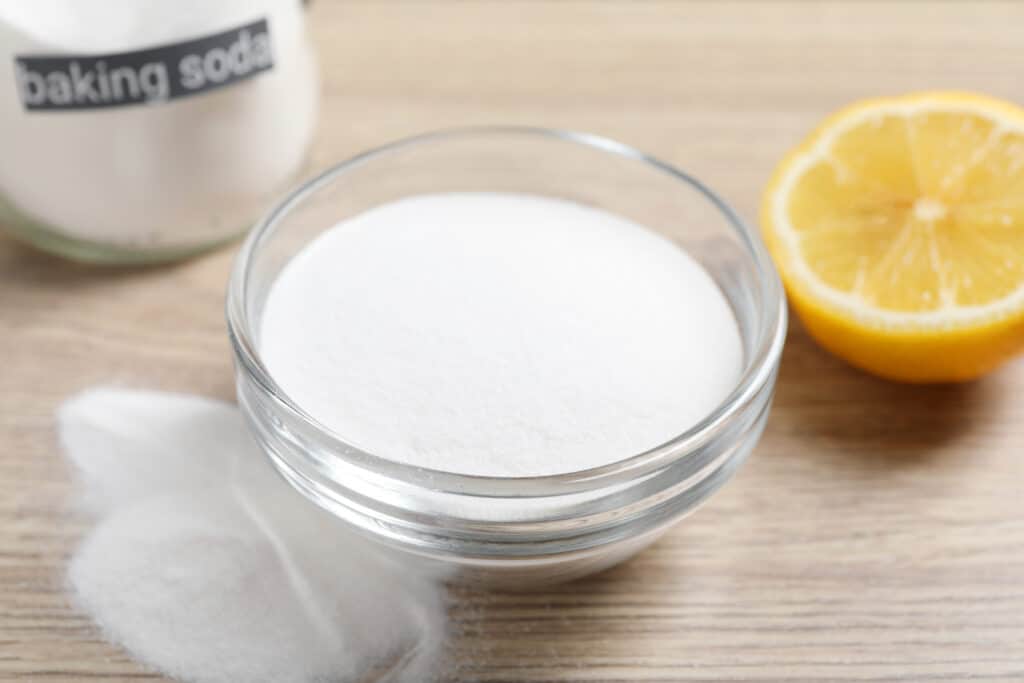
- Mix equal parts baking soda and sugar in a small bowl.
- Pour about a tablespoon onto a jar lid, bottle cap, or scrap of cardboard.
- Place it where roaches travel. Good spots include under the kitchen sink, behind the fridge and stove, inside lower cabinets, and near bathroom pipes.
- Check it daily for three to five days. Replace it if it gets wet or clumped. Moisture sets off the reaction early and ruins the bait.
- Clean up dead roaches and leftover bait. Dead roaches and their droppings attract more roaches.
A few cautions before you start:
- Keep it away from pets and kids. Baking soda is not highly toxic, but a pet can get sick from eating a large amount.
- Watch for ants. A dish of sugar is an open invitation to ants and other insects, which is the last thing you want in a Florida kitchen.
- Don’t expect overnight results. Even when it works, you’ll only catch the adults that feed on it.
Why Baking Soda Falls Short Against Real Infestations
Baking soda misses the part of the problem you can’t see. By the time you spot roaches in daylight, most of the population is hidden in wall voids, cabinet gaps, and appliance motors.
Roaches Reproduce Faster Than Bait Can Kill Them
German cockroaches, the small tan roaches common in Jacksonville kitchens, breed fast. A single female can produce several hundred offspring in her lifetime. Baking soda does nothing to the egg cases she carries or hides, so new roaches keep hatching after the bait is gone.
It Only Kills the Roaches That Feed
Bait only works on roaches that find it and eat enough. Nymphs, egg cases, and roaches that stay deep in walls never touch it. You may see fewer roaches for a week, then watch the numbers climb again.
Florida Roaches Come From Outside Too
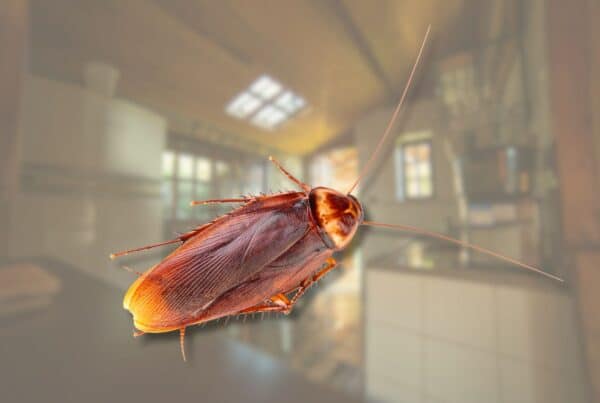
American cockroaches, better known as palmetto bugs, live in mulch, sewers, trees, and gutters. Heavy summer rain drives them indoors through drains and gaps around doors. A dish of bait in your kitchen does nothing about the source outside. (If you’re curious which of these roaches can fly, see our guide to flying cockroaches in Florida.)
Moisture Works Against It
Northeast Florida is humid year-round. Baking soda reacts with moisture, so bait left near sinks, dishwashers, and bathrooms breaks down quickly. Leaky pipes and poor foundation drainage also give roaches the water they need to thrive.
DIY Roach Methods Compared
Some DIY options work better than baking soda, but none of them fully solve an established infestation. Here’s how the most common home remedies stack up:
| Method | How It Works | Does It Kill Roaches? | Best For | Main Drawback |
|---|---|---|---|---|
| Baking soda and sugar | Must be eaten; reacts in the gut | Sometimes, slowly | A roach or two | Roaches avoid it; no effect on eggs |
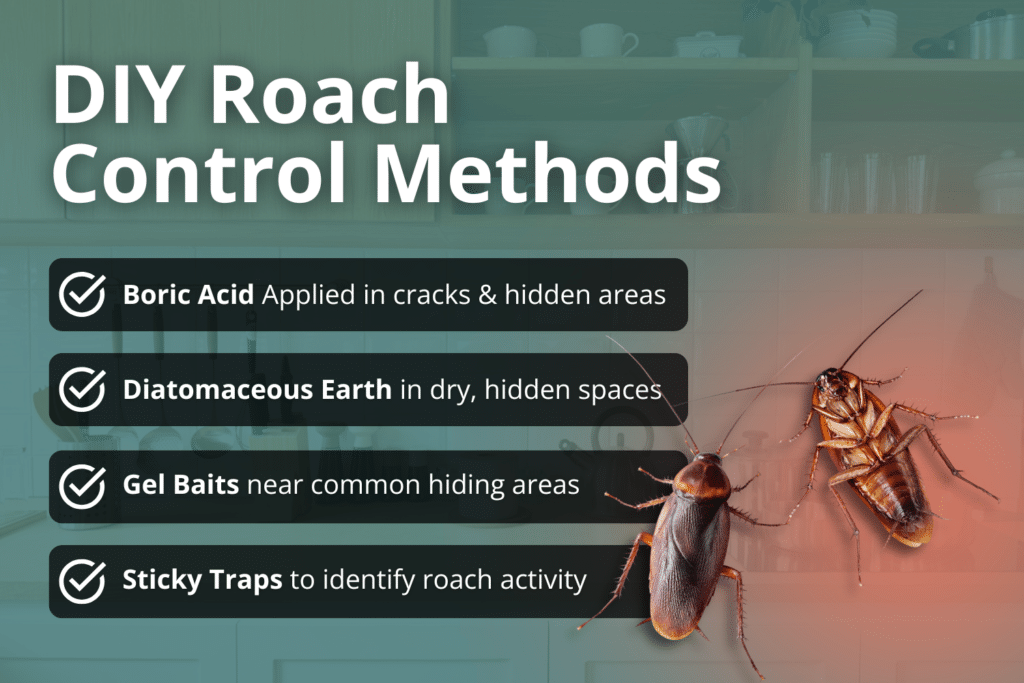
| Boric acid | Sticks to legs; roaches swallow it while grooming | Yes | Cracks, wall voids, behind appliances | Toxic to pets and kids; clumps when damp |
| Diatomaceous earth | Scratches the outer shell; dries roaches out | Yes, slowly | Dry, hidden spaces | Weak in humid areas; must stay dry |
| Gel baits and bait stations | Roaches eat it and carry it back to others | Yes | Kitchens and bathrooms | Must be placed exactly where roaches hide |
| Sticky traps | Catches roaches that walk across | Only the ones caught | Finding where roaches travel | Won’t control a population |
| Peppermint and essential oils | Strong smell may repel | No | Short-term deterrent | Can push roaches into other rooms |
Boric Acid
Boric acid is the DIY step up from baking soda. It clings to a roach’s legs and body, and roaches swallow it when they clean themselves. A light dusting in cracks, under appliances, and inside wall voids works better than piles, which roaches will walk around. Keep it out of reach of children and pets.
Diatomaceous Earth
Food-grade diatomaceous earth is a fine powder made from fossilized algae. It damages a roach’s waxy outer coating and causes it to lose moisture. It needs to stay dry to work, which makes it a tough fit for humid Florida homes.
Gel Baits and Bait Stations
Store-bought gel baits and bait stations are usually the most effective option a homeowner can buy. Roaches eat the bait, return to their hiding spots, and spread it to others. Placement is everything. A bait station two feet from the harborage may get ignored.
Sanitation and Sealing
No product works for long if roaches have food, water, and shelter. The National Pesticide Information Center recommends sealing cracks around cabinets, pipes, and doors, and cleaning up roach debris, since roaches are drawn to it. It also warns that some products repel roaches rather than kill them, which can chase them into other rooms. For more on entry points, read how roaches get into your house. Small fixes like intact window screens help too.
Why Professional Roach Control Works Better
Professional treatment works better because it targets the whole population, not only the roaches that happen to find a dish of bait. A trained technician does three things DIY methods can’t.
1. Identifies the species. German cockroaches, American cockroaches, and smoky brown cockroaches live in different places and respond to different treatments. The wrong approach can waste weeks. (Not sure you’re even looking at a roach? Some Florida bugs look like cockroaches but aren’t.)
2. Finds the harborage. Roaches hide in wall voids, behind cabinets, under appliances, and in outdoor mulch beds. Technicians inspect these areas and treat where roaches live, not only where you’ve seen them.
3. Combines methods. Clemson Cooperative Extension notes that cockroach control takes more than insecticides and works best when several methods are used together. It also points out that professionals have the equipment, materials, and training to apply treatments safely. That combination usually includes targeted baits, crack-and-crevice treatment, a perimeter barrier outside, and advice on sealing entry points.
At Inside & Out Pest Services, our technicians use green, organic products placed strategically, so treatment targets roaches and not your family or pets.
Related Questions to Explore
Does baking soda and sugar kill roaches?
It can kill a few roaches that eat enough of it, but it rarely controls an infestation. The sugar lures roaches in, and the baking soda has to be eaten to work. For lasting results, Inside & Out Pest Services treats roaches where they hide, not just where they feed.
How long does it take baking soda to kill roaches?
Most sources report 12 to 24 hours after a roach eats a large enough dose, and several days before you notice fewer roaches. Many roaches never eat it at all.
Is boric acid better than baking soda for roaches?
Yes. Boric acid kills on contact and through grooming, so roaches don’t have to choose to eat it. It must be placed exactly where roaches travel and kept away from children and pets.
Does diatomaceous earth kill roaches?
Yes, but slowly, and only when it stays dry. It damages a roach’s outer coating so the insect dries out. In humid Jacksonville homes, it loses strength near sinks and bathrooms.
Does peppermint oil repel roaches?
Peppermint oil may keep roaches away from a treated spot for a short time, but it doesn’t kill them. Repellents can push roaches into other rooms or deeper into walls.
Can you get rid of roaches permanently on your own?
You can reduce a small problem with gel baits, cleaning, and sealing gaps. Established infestations, especially German cockroaches, usually need professional treatment to reach the eggs and hidden roaches. Request a service if you’re seeing roaches every day.
When to Call a Professional
Call a pest professional when home remedies stop making a difference. Clear signs include:
- You see roaches during the day, which usually means hiding spots are full.
- You find droppings that look like pepper or coffee grounds in cabinets or drawers.
- You find egg cases, small brown capsules, behind appliances or in corners.
- You notice a musty, oily smell in the kitchen or pantry.
- Roaches return within a few weeks after DIY treatment.
- Someone in your home has asthma or allergies. Roach droppings and shed skins are known triggers.
Roach activity spikes in Northeast Florida during the rainy season, roughly June through October, when flooding pushes palmetto bugs indoors. If you’re in Jacksonville, St. Augustine, Orange Park, or anywhere in our service area, a quick inspection can tell you what species you have and how far the problem has spread.
Conclusion
Baking soda can kill a roach that eats it, but it won’t stop an infestation. Here’s what to remember:
- Baking soda and sugar is fine for a single stray roach, not for a daily problem.
- Boric acid, gel baits, sealing, and cleaning all work better than baking soda.
- Hidden roaches and egg cases are why DIY methods keep failing.
If roaches keep coming back, let our team handle it. Learn more about our pest control services in Jacksonville or schedule an inspection today.