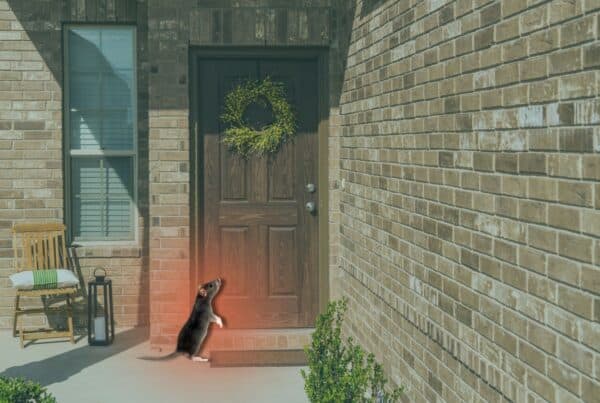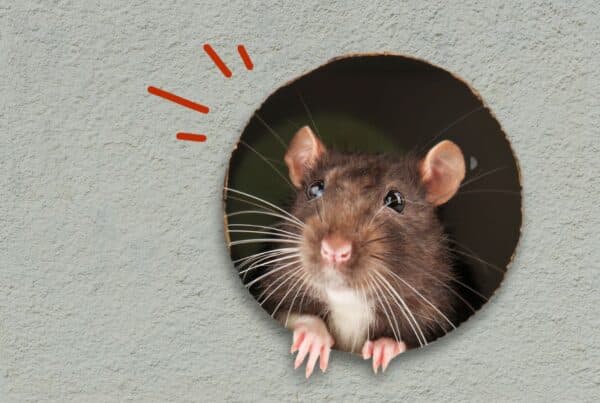

Rats in the attic usually announce themselves with scratching or scurrying overhead at night, droppings near the attic hatch, or chewed insulation. In Northeast Florida, the culprit is almost always the roof rat, a climber that gets in through gaps in the roofline, soffits, and vents. Rats in an attic can chew electrical wires, ruin insulation, and spread disease, so it’s worth acting quickly.
At Inside & Out Pest Services, we see attic rodent activity pick up across Northeast Florida as the weather cools. Below, you’ll learn the signs, why rats move in this time of year, the risks, and how trapping and exclusion keep them out for good.
Signs You Have Rats in Your Attic
The most common sign of rats in the attic is noise at night. Rats are most active shortly after sunset, in the middle of the night, and just before dawn. Look and listen for:
- Scratching, scurrying, or gnawing in the ceiling or walls after dark
- Droppings that are dark, about 1/2 inch long, and shaped like a grain of rice with pointed ends
- Gnaw marks on wood, wiring, PVC pipes, or AC ductwork
- Greasy rub marks along beams, rafters, or entry holes where rats travel the same path
- Tunnels or flattened areas in the attic insulation
- Nests made of shredded insulation, paper, or fabric
- A musky, ammonia-like smell from urine
- Pets staring or barking at the ceiling
If you’re not sure what you’re seeing, our guide to rat vs. mouse droppings shows how to tell them apart.
Is It Rats, Squirrels, Mice, or Raccoons?
The time of day and the type of sound are the best clues to what’s in your attic.
| Animal | When you hear it | What it sounds like |
|---|---|---|
| Rats | After dark, late at night, before dawn | Fast scurrying, scratching, gnawing |
| Mice | Mostly at night | Lighter, softer scratching |
| Squirrels | Early morning and daytime | Louder running and rolling sounds |
| Raccoons | Night | Heavy thumps and dragging |
| Bats | Dusk and dawn | Rustling and squeaking near the roofline |
If the noise is coming from inside a wall instead of overhead, read how to tell if there’s a mouse in the wall.
Why Rats Move Into Attics in Fall and Winter in Northeast Florida
Roof rats are the main rat pest in Florida, and they prefer to live above the ground. The University of Florida IFAS Extension calls the roof rat “the worst rodent pest in the state of Florida and most abundant.” It notes that roof rats like to nest in attics and soffits, and that they breed year-round with peaks in spring and fall. Norway rats, the heavier burrowing rats common in northern cities, are rare in Florida, so the rat in your attic is almost certainly a roof rat.
That fall peak lines up with the weather. As nights cool down in Jacksonville, St. Augustine, and the beaches, rats look for warm, dry, sheltered spots to raise their young. A warm attic with soft insulation is ideal. Outdoor food also gets harder to find, so rats move closer to homes where they can reach:
- Pet food and bird seed
- Fallen citrus and other fruit
- Garbage and compost bins
- Pantry food inside the house
Palm trees make the problem worse. Roof rats nest in old palm fronds and use trees, branches, and utility lines as highways to the roof. Learn more in our post on whether rats live in palm trees.
How Rats Get Into Your Attic
Rats usually get into the attic from the roofline. Roof rats are excellent climbers, and an adult rat can squeeze through a hole about the size of a quarter. Common entry points include:
- Gaps along soffits and fascia, especially where two rooflines meet
- Roof, ridge, and gable vents with loose or damaged screens
- Gaps around plumbing vent pipes and other roof penetrations
- Openings where AC lines, cables, or pipes enter the house
- Damaged or lifted shingles and roof tiles
- Overhanging tree branches and palm fronds that touch the roof
- Utility lines that rats can run along to reach the roof
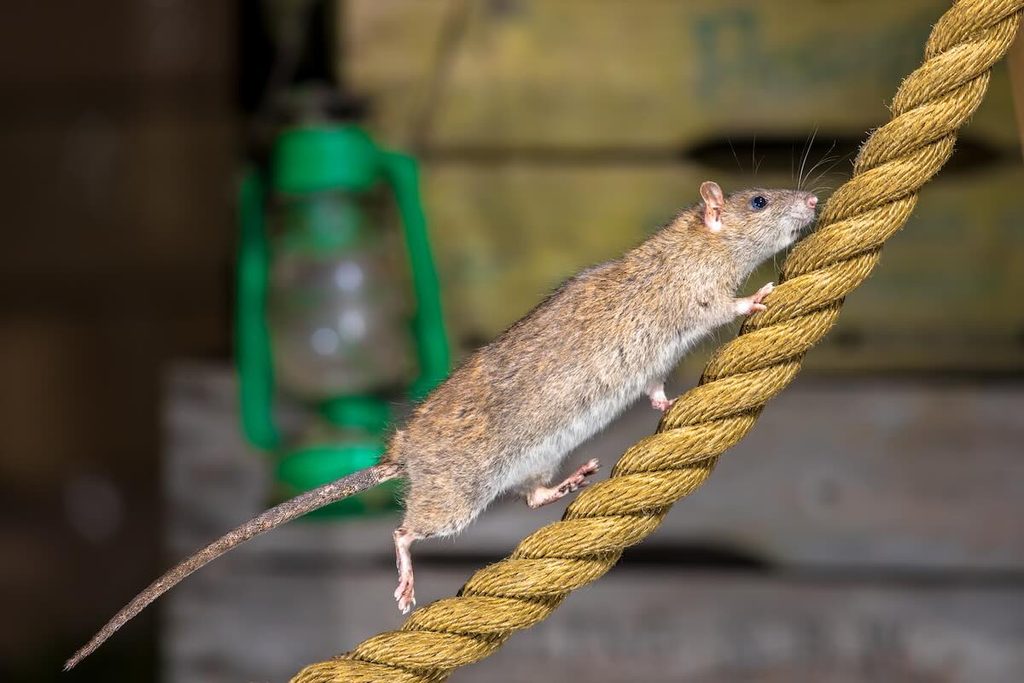
The eaves are one of the most common trouble spots, so it helps to know what a roof eave does and how gaps form there.
Are Rats in the Attic Dangerous?
Yes. Rats in the attic are a risk to your home and your health, even if you never see one.
- Fire risk. Rats gnaw constantly to keep their teeth worn down, and electrical wires are a common target. The UF IFAS Extension warns that roof rats chew through wires, which can potentially start fires.
- Insulation damage. Rats tunnel through insulation and soak it with urine and droppings. Damaged insulation loses its ability to keep your home comfortable and usually has to be removed and replaced.
- AC and duct damage. Rats can chew through flexible ductwork in the attic, letting cooled air escape into the attic.
- Disease. Rat droppings, urine, and nesting material can carry germs. The UF IFAS Extension also notes that roof rats are the reservoir host for murine typhus, a disease spread to people through fleas.
- Odors and other pests. Rat nests attract fleas and mites, and a rat that dies in the attic or a wall can leave a strong smell for weeks.
Never sweep or vacuum rat droppings. The CDC’s rodent cleanup guidance says to air out the space for 30 minutes, wear gloves, spray droppings and nesting material with a disinfectant or bleach solution, and let it soak for five minutes before wiping it up.
Why Poison Bait in the Attic Backfires
Putting poison bait in the attic often creates a bigger problem. A poisoned rat doesn’t die right away. It may crawl into a wall void, under insulation, or behind ductwork, where you can’t reach it. The result is a dead animal smell that can last for weeks, plus flies.
Bait can also harm pets and wildlife that eat a poisoned rat. That’s why trapping and sealing the entry points work better in an attic than poison.
How to Get Rid of Rats in Your Attic
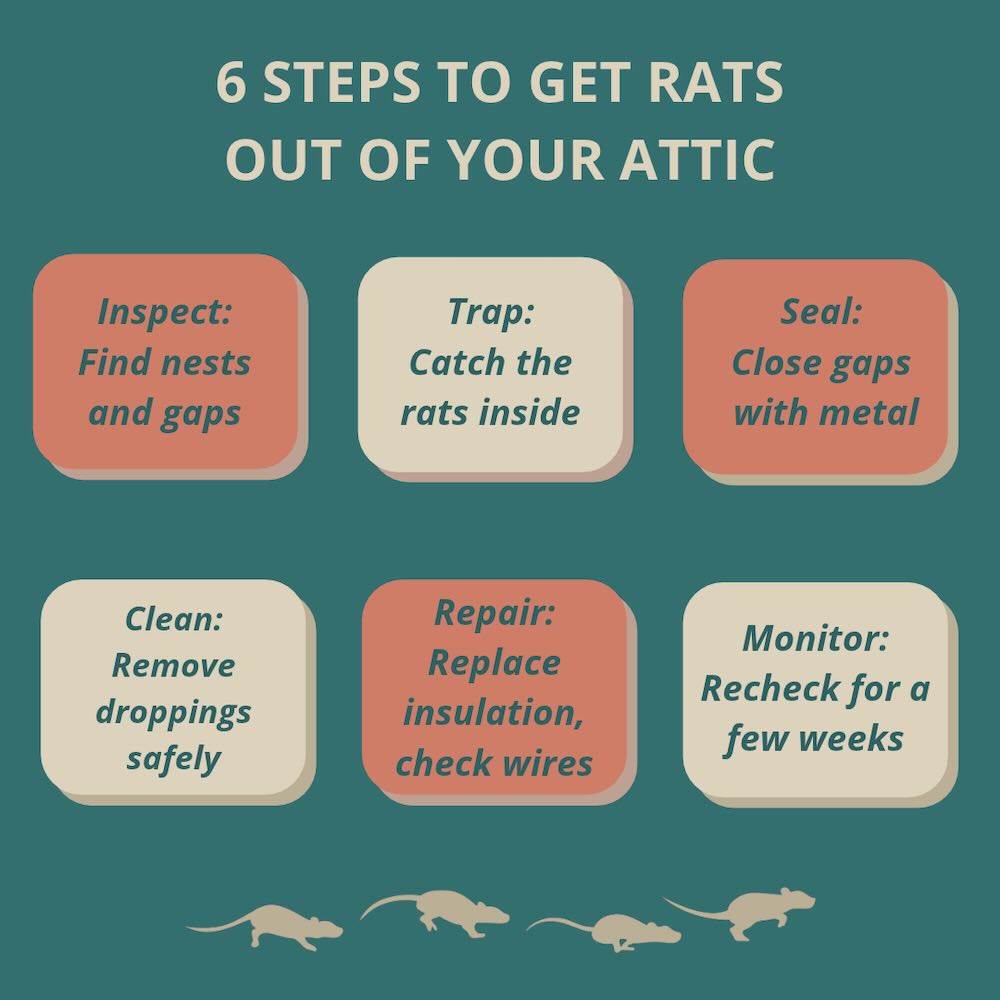
Getting rid of rats in the attic takes more than setting a few traps. Lasting results come from removing the rats you have and then keeping new ones out.
- Inspect the attic and roofline. Find the nests, the travel paths, and every gap rats are using. Check from the inside and the outside.
- Trap first. Place snap traps along the paths rats travel, such as next to walls, along beams, and near entry holes. Keep traps away from children and pets.
- Seal entry points after the rats are gone. If you seal holes while rats are still inside, they’ll chew new holes or die in the walls. Gaps are sealed with durable materials like metal mesh, hardware cloth, and metal flashing. Expanding foam alone won’t stop a rat. Our post on how rodent exclusion works walks through the full process.
- Clean and sanitize. Remove droppings, nests, and soiled insulation safely, following CDC guidance, and treat the area to remove the scent trails that attract more rats.
- Repair the damage. Replace contaminated insulation and have an electrician check any chewed wiring.
- Monitor. Check traps and recheck the attic over the next few weeks to make sure no new activity shows up.
How to Keep Rats Out of Your Attic
A few simple habits make your home much less attractive to rats, especially heading into fall:
- Trim tree branches and palm fronds so they don’t touch the roof.
- Remove dead palm fronds, where roof rats like to nest.
- Pick up fallen citrus and fruit from the yard.
- Store pet food and bird seed in sealed containers, and bring pet bowls in at night.
- Keep garbage and recycling bins tightly closed.
- Check soffits, vents, and roof penetrations for gaps each fall.
Related Questions to Explore
- Will rats leave the attic on their own? Rarely. An attic gives rats shelter, warmth, and a safe place to raise their young, so once they settle in, they tend to stay and multiply. Roof rats can have several litters a year, so a small problem can grow quickly. Trapping and sealing the entry points is the reliable way to get them out.
- Can I just seal up the holes to keep rats out of my attic? Not while rats are still inside. Sealing them in can push them to chew new holes, sometimes into your living space, or leave them to die in the walls. Trap first, confirm the activity has stopped, then seal. Learn more about rodent exclusion.
- Do I need to replace my attic insulation if I had rats? Often, yes. Insulation that’s matted down or contaminated with droppings and urine won’t insulate well and can hold odors. Small, clean areas may be fine, but heavily soiled insulation should be bagged, removed, and replaced after the rats are gone.
- Can rats chew through electrical wires in my attic? Yes. Chewed wiring is one of the most serious risks of rats in the attic because exposed wires can spark a fire. If you find gnawed wires, have a licensed electrician inspect them.
- How long does it take to get rid of rats in the attic? It depends on the size of the problem and how many entry points need sealing. Trapping often takes one to a few weeks, followed by sealing and follow-up checks to make sure no new rats get in.
- What does a dead rat smell like, and what should I do? A dead rat has a strong, sweet, rotting smell that can last for weeks, especially in the Florida heat. If the smell is coming from a wall, a professional can help locate it.
When to Call a Professional
A single mouse might be a DIY job, but rats in the attic usually need a professional. Call a pest control company when:
- You hear activity overhead for more than a few nights
- You find droppings, nests, or chewed wires in the attic
- You can’t find or safely reach the entry points on the roofline
- The rats keep coming back after trapping
- You smell a dead animal in the attic or walls
Inside & Out Pest Services provides rodent control across Northeast Florida, including Jacksonville, the beaches, St. Augustine, Ponte Vedra, and Palm Coast. Our process covers inspection, trapping, exclusion, and prevention, and if rodents come back between scheduled visits, we take care of them at no extra charge. Call 904-878-0089 with questions.
Conclusion
- Night noises, droppings, and chewed insulation are the clearest signs of rats in the attic.
- In Northeast Florida, roof rats move into attics most often in fall and winter, climbing in through gaps along the roofline.
- Trap first, then seal entry points with durable materials, and clean up safely.
If you’re hearing scratching overhead, request a free estimate, and we’ll find out what’s in your attic and how it’s getting in.