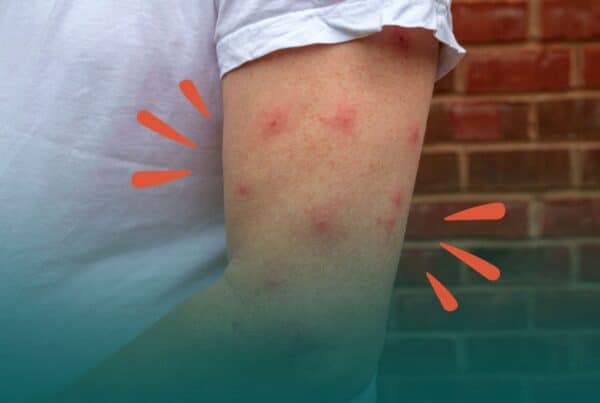

Yes, sugar ants can bite, but it is rare and usually mild. Most people feel a small pinch or nothing at all, and the spot fades fast. In Florida, “sugar ant” is a nickname for small, sweet-loving insects, and a few of them can nip when they get pinned against your skin.
At Inside & Out Pest Services, we help homeowners work out which insects are in the kitchen and which ones deserve a closer look. This guide covers what a bite feels like, how to treat it, and when to call a pro.
What Is a Sugar Ant in Florida?
A sugar ant is not one species. It is a nickname for any ant that heads straight for syrup, juice, honey, and other sweets. The true sugar ant lives in Australia, so here the name gets used for whichever small ant is crossing your counter. Some are tiny and pale, while others are large and dark, so size alone will not tell you much.
That matters for the bite question, because each kind of ant acts a little differently. We cover the common Florida species and how to keep them out in our post on keeping Florida sugar ants out of your house. This post stays focused on bites.
Can Sugar Ants Bite You?
Yes, but not often. Sugar ants are not aggressive, and they would rather eat your snack than fight you. When one does bite, it is usually because it got trapped against your skin or you disturbed its nest.
The biggest biters in the group are Florida carpenter ants. UF/IFAS says Florida carpenter ants bite but do not sting, and workers can also spray a little formic acid when they feel threatened. That spray can burn if it lands on a bite or on broken skin. Smaller sweet-loving species, like ghost ants, have tiny jaws and rarely break the skin.
None of these ants have a stinger. If an ant leaves a burning, blister-like spot, you are probably dealing with something else.
Is It a Sugar Ant or an Ant That Stings?
Fire ants are the usual mix-up. They are common in Florida, they sting instead of bite, and the sting often turns into an itchy bump with a white top. If you get several marks at once, or the spot burns right away, think fire ants first.
| What to compare | Sugar ants | Fire ants |
|---|---|---|
| Where you see them | Kitchen counters, sweet spills, pet food | Dirt mounds in the yard |
| What they do | Bite, but rarely | Sting, often many at once |
| How it feels | A pinch, or nothing | Burning, then an itchy bump |
Not every ant bites the same way. All South Pest Control in Georgia has a helpful look at which ants bite and where they live if you want to compare species across regions.
When Sugar Ant Bites Usually Happen
Bites tend to follow a few common situations:
- Grabbing food. You pick up a sweet snack, cup, or pet bowl that is covered in tiny insects.
- Working outdoors. Moving firewood, mulch, or yard debris can disturb a carpenter ant nest.
- Going barefoot. Trails near doors and baseboards put them right where you walk.
- Brushing against damaged wood. Carpenter ants dig galleries in damp or rotting wood, so a nest can sit right behind a wall or porch rail.
Night is the riskiest time. UF/IFAS says carpenter ants forage mostly at night, so a late snack or a midnight trip to the kitchen is when you are most likely to meet one.
What a Sugar Ant Bite Looks and Feels Like
Most bites are so mild that people never notice them. When you do, here is what to expect:
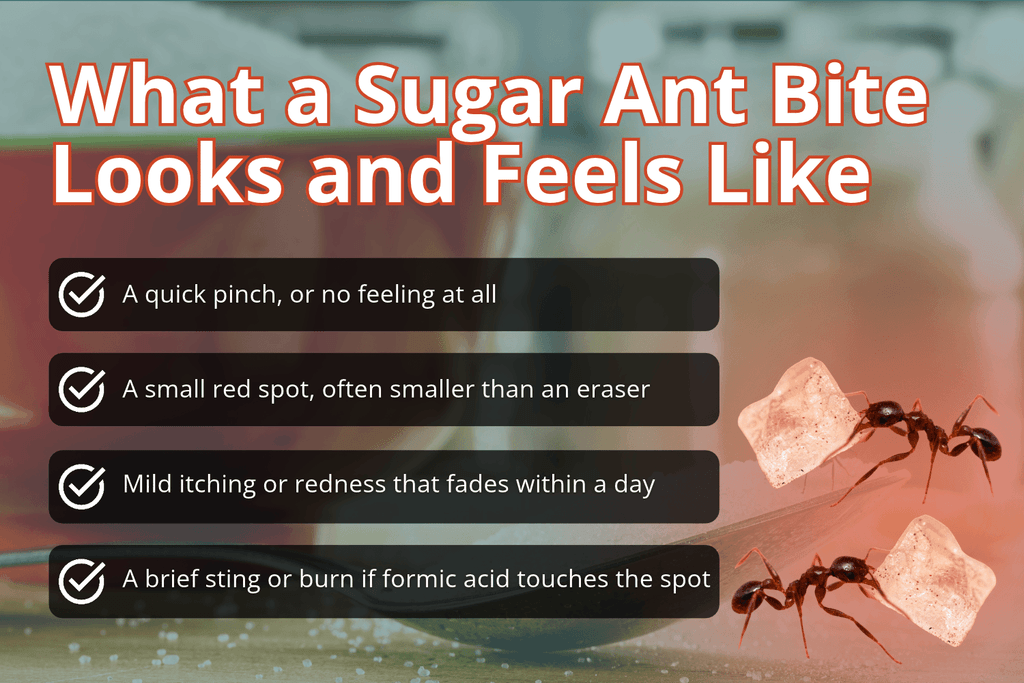
- A quick pinch, or no feeling at all
- A small red spot, often smaller than a pencil eraser
- Mild itching or redness that fades within a day
- A brief sting or burn if formic acid touches the spot
Not sure what bit you? Our guide to common bug bites can help you narrow it down.
How to Treat a Sugar Ant Bite
A minor bite needs simple care. Follow these steps:
- Wash the spot. Use mild soap and water.
- Cool it down. Hold a cold compress on the area for about 10 minutes to ease swelling and itching.
- Calm the itch. Hydrocortisone cream or an oral antihistamine can help. Follow the label.
- Do not scratch. Broken skin can get infected.
- Check it again later. Look at the spot in a day or two to make sure it is fading.
See a doctor if the redness spreads, the spot fills with pus, or it still looks worse after a few days. Call 911 right away if someone has trouble breathing, swelling in the face, lips, or throat, or feels dizzy or faint. Severe allergic reactions to ant bites are rare, but they are serious.
Children, older adults, and anyone with a known insect allergy should be watched more closely after a bite. When in doubt, call your doctor.
What Brings Sugar Ants Indoors
Sugar ants follow scent trails to food. One scout finds a sticky spill, heads back to the nest, and leaves a trail for the rest of the colony. Florida’s warm, wet weather keeps them active most of the year, and heavy rain can push them toward dry kitchens and bathrooms.
If you see one, you are probably seeing the first of many. That is why wiping up the trail is only a short-term fix.
How to Keep Sugar Ants Out
A few habits make your home less inviting:
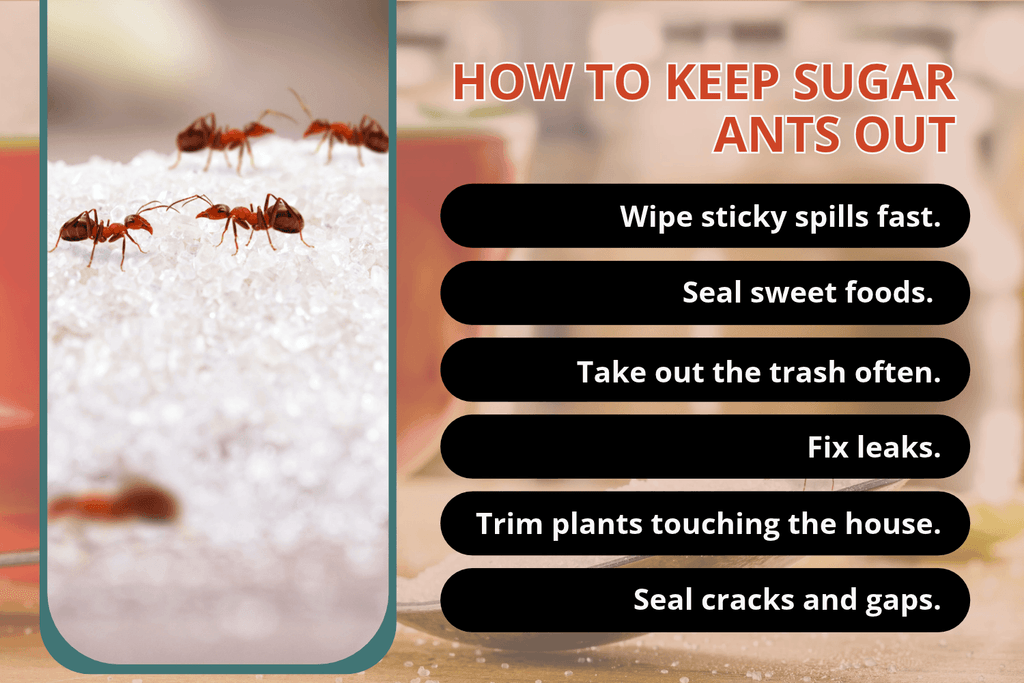
- Wipe sticky spills fast. Syrup, soda rings, and juice drips are the main draw.
- Seal sweet foods. Keep sugar, honey, and pet food in tight containers.
- Take out the trash often. Sweet residue in bins attracts scouts.
- Fix leaks. Moisture draws ants indoors.
- Trim plants touching the house. UF/IFAS notes that branches and shrubs can work as bridges for carpenter ants.
- Seal cracks and gaps. Caulk around pipes, windows, and doors.
If ants are already marching, avoid spraying right on the trail. UF/IFAS says baits are the most effective method because workers carry the toxicant back to the queen, and sprays near bait can repel them. Large insects or sawdust-like debris could point to a bigger problem, so compare carpenter ants vs. termites and check whether you are seeing termites or ants with wings.
Seeing trails you cannot clear? Request pest control service, and we will help you find where they are coming from.
Related Questions to Explore
- Do sugar ants bite humans? Yes, but rarely. A bite is usually a light pinch with a small red spot that fades within a day.
- Do sugar ants bite at night? They can. Carpenter ants forage mostly at night, so that is when a bite is most likely, especially in dark kitchens.
- Do sugar ants sting? No. Sugar ants do not have stingers. A burning sting usually points to fire ants or another stinging insect.
- Are sugar ant bites dangerous? Not for most people. The risk comes from allergic reactions, which are rare, or from infection if the skin is scratched open.
- How can I tell a sugar ant bite from a spider or mosquito bite? Ant bites are usually small and mild, while spider and mosquito bites can swell more. This breakdown of spider bites vs mosquito bites from All South Pest Control shows the differences.
- What attracts sugar ants to my house? Sweet food, sticky spills, and moisture. Our guide to keeping sugar ants out of your house covers prevention in more detail.
- Why do sugar ants keep coming back after I clean? Cleaning removes the trail, but not the nest. As long as the colony is alive, new scouts will find a way in.
When to Call a Professional
Wiping counters and setting a few baits can handle a stray ant or two. It is time to call a pro if any of these are true:
- Ant trails return within days of cleaning
- You see ants coming out of walls, cabinets, or around windows
- Large ants show up at night, or you spot sawdust-like debris
- Someone in the home has been bitten more than once
- You cannot tell which kind of ant you have
Inside & Out Pest Services can identify the ant, find where it is nesting, and treat the source instead of just the trail. Bring a photo or a sample if you can. A clear picture helps us name the species faster and choose the right treatment.
Learn more about our pest control services and the areas we cover on our service area page.
Conclusion
- Sugar ants can bite, but bites are rare, mild, and usually fade within a day.
- Wash the spot, cool it, and watch for signs of a bad reaction.
- Baits and good kitchen habits keep them out, and a pro can handle the nest.
Tired of ant trails in your kitchen? Request pest control service from Inside & Out Pest Services and let us find the source.