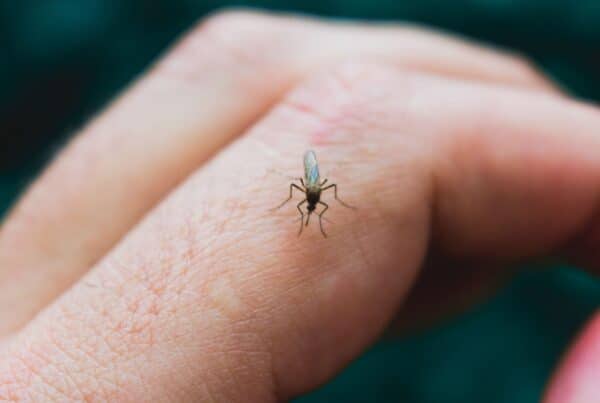

“Gnat” isn’t one insect. It’s a catch-all name for several small flies, most commonly fruit flies, fungus gnats, and drain flies, and each one breeds somewhere different and needs a different fix. Spraying at random rarely works because it’s treating the symptom instead of the source.
Identify which gnat you actually have, find where it’s breeding, and eliminate that spot, and the problem generally clears up within a couple of weeks.
Step 1: Figure Out Which “Gnat” You Actually Have
Before setting a single trap, take thirty seconds to look at the insect itself and where it’s gathering. This one step saves the most time, because the wrong fix, like spraying a kitchen for fungus gnats that are actually breeding in a houseplant, just delays the real solution.
| Fruit Flies | Fungus Gnats | Drain Flies | |
| Appearance | Tan to brown, bright red eyes, compact bulbous body | Slender, black or dark gray, long legs, look like tiny mosquitoes | Fuzzy, moth-like, hairy wings and body |
| Flight | Quick, hover in loose clouds | Weak, erratic, short start-stop flights close to soil | Rarely fly far; often rest on nearby walls |
| Found near | Ripe or rotting produce, trash, drains | Houseplant soil, overwatered pots | Bathroom and kitchen drains |
| Breeding site | Fermenting fruit, drains, garbage | Damp potting soil | Organic buildup (biofilm) inside drain pipes |
| What draws them in | Overripe fruit, sugary residue | Overwatered plants | Grease and organic gunk in slow drains |
Remember: fruit flies gather around food, fungus gnats gather around plants, and drain flies stay glued to the drain itself. Where you see the most activity usually tells you exactly what you’re dealing with.
Step 2: Track Down Where They’re Breeding
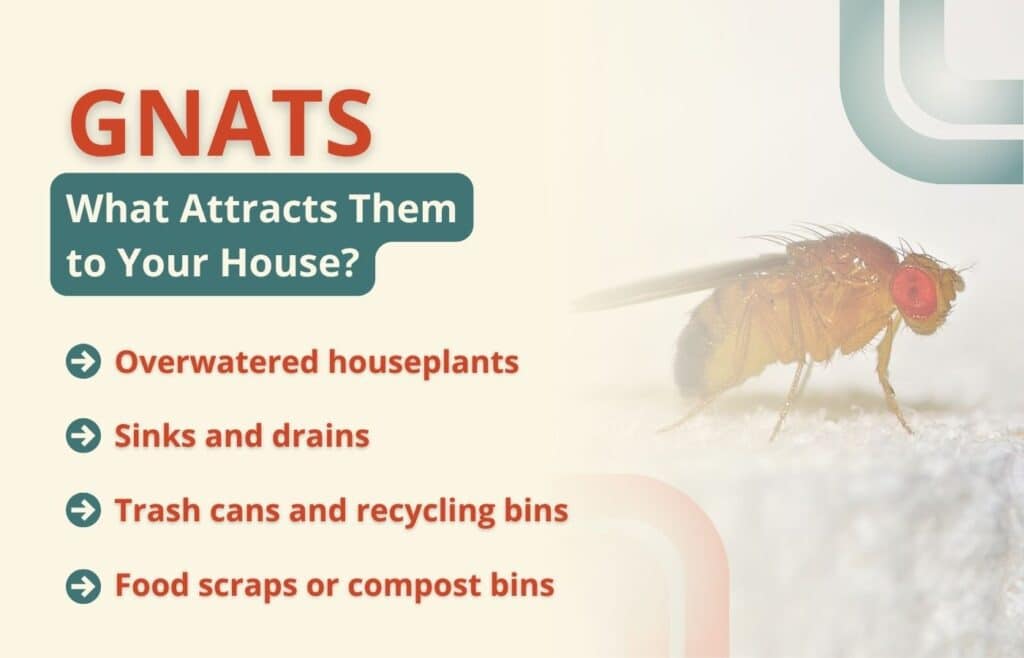
Gnats are drawn to moisture and organic material, so the search almost always leads to one of these spots:
- Kitchen sink and garbage disposal: food particles and moisture collect below the drain flange, an ideal fruit fly and drain fly breeding ground.
- Trash and recycling bins: especially anything holding food residue or sitting unwashed for more than a day.
- Overwatered houseplants: standing moisture in the top inch of soil is prime fungus gnat breeding territory.
- Fruit bowls and produce storage: a single overripe piece of fruit can support an entire fruit fly generation.
- Bathroom and floor drains: organic film builds up inside the pipe, well below what a visual check will catch.
- Recycling containers: sugary residue in bottles and cans left too long is an easy food source.
A quick way to confirm a drain is the source: cover it with clear tape overnight. If gnats get trapped on the underside by morning, that drain is breeding them.
Step 3: Match the Treatment to the Gnat
Once you know which gnat and where it’s breeding, the fix is usually straightforward.
For fruit flies:
- Remove all ripe and overripe produce, or store it in the fridge until it’s needed.
- Wipe down counters, spills, and the inside of trash cans to eliminate residue.
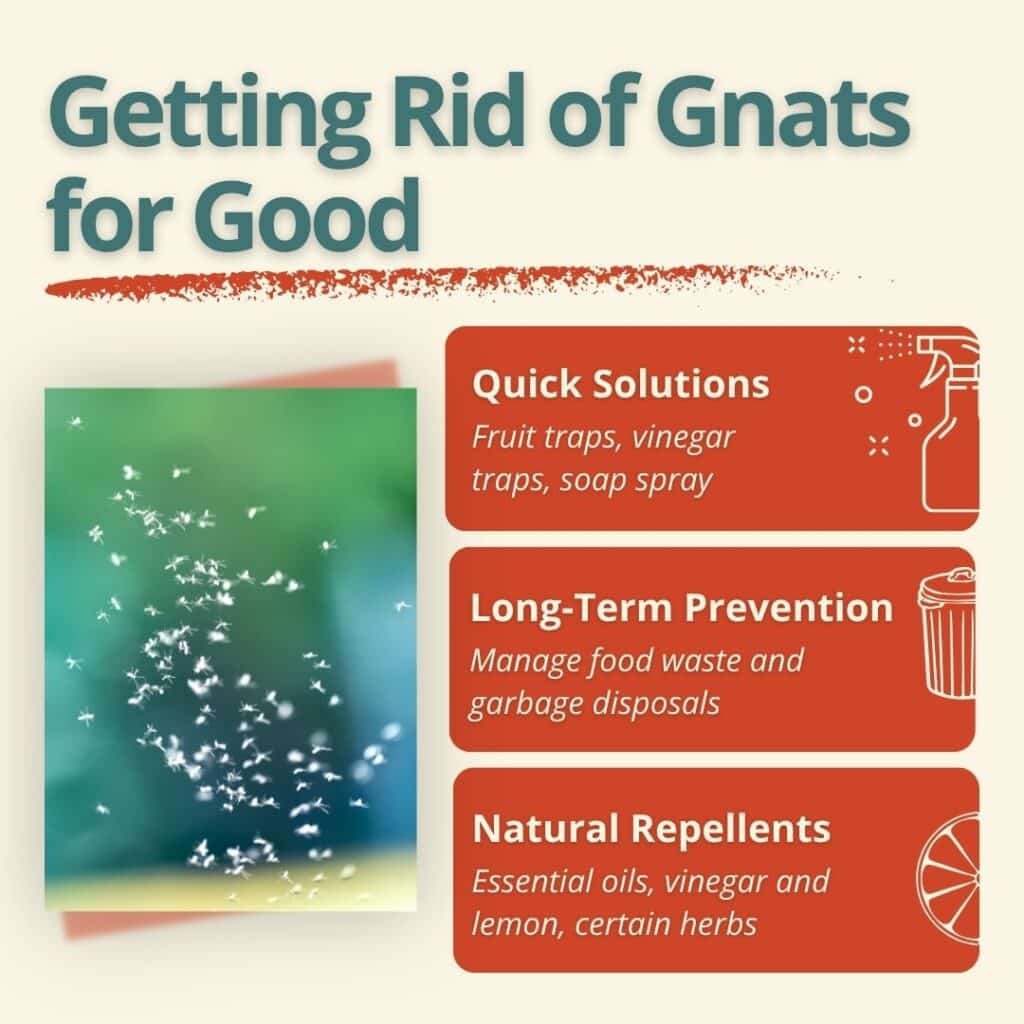
- Set a vinegar trap by filling a small bowl with equal parts vinegar and water. Then add a few drops of dish soap and place it near the activity. The vinegar attracts them, and the soap breaks the surface tension so they can’t escape.
- A fruit trap works the same way. Leave a piece of ripe fruit in a bowl, cover it with plastic wrap, and poke a few small holes. Gnats get in easily but can’t find their way back out.
Stopping fungus gnats:
- Let the top inch of soil dry out completely between waterings. This alone breaks the breeding cycle in most cases, since fungus gnat larvae can’t survive in dry soil.
- Use yellow sticky traps near affected plants to catch adults before they lay more eggs.
- For an active infestation, a Bti-based soil drench (a naturally occurring bacterium that targets fly larvae without harming plants) kills larvae within days.
- Avoid repotting with already-damp soil. This is one of the most common ways fungus gnats get introduced in the first place.
Dealing with drain flies:
- Scrub the inside of the drain pipe with a stiff brush, not just the visible drain cover. The organic film they breed in sits below what you can see.
- Follow with an enzyme-based drain cleaner, which breaks down the buildup rather than just flushing it temporarily.
- Run hot water through the drain after treatment to help clear any remaining residue.
A soap spray works as a general knockdown for all three.
Just mix a few drops of dish soap into a spray bottle of water and mist directly on visible gnats. It disrupts their outer coating on contact, which helps reduce numbers while the source treatment does its work.
Step 4: Prevent Them From Coming Back
Getting rid of the current gnats matters less than making sure they don’t return, which comes down to a short list of habits:
- Take out kitchen trash before it accumulates food residue overnight
- Rinse recyclables before storing them
- Don’t let dishes sit in standing water
- Check houseplant soil moisture before watering rather than watering on a fixed schedule
- Run water through rarely-used drains (like a guest bathroom) weekly to prevent buildup
- Store ripe produce in the refrigerator once it’s fully ripened
Most Jacksonville homes see gnat activity pick up in warmer, humid months, when moisture and organic breakdown both happen faster. Staying ahead of these habits during summer specifically makes the biggest difference.
Common Mistakes That Make a Gnat Problem Last Longer
A few habits tend to backfire, even with good intentions:
- Bug spray as a first move. Spraying visible gnats kills what’s flying at that moment but does nothing to the breeding site, so new adults keep emerging within days.
- Treating all gnats the same way. A vinegar trap set for fungus gnats breeding in soil won’t work, since they’re not drawn to fermentation the way fruit flies are. Matching the trap to the species (Step 1) isn’t optional if you want results.
- Watering houseplants on a fixed schedule. Watering every few days regardless of soil moisture is one of the most common ways homeowners unintentionally maintain a fungus gnat breeding ground indefinitely.
- Cleaning only visible surfaces. Wiping counters and running the disposal briefly addresses what you can see but skips the organic film lower in the pipe, which is often the actual source.
Why Gnats Keep Coming Back Even After You Clean
If gnats persist despite cleaning visible surfaces, the breeding site usually hasn’t been addressed, only what’s visible above it. A clean kitchen counter doesn’t help if the source is organic film inside the disposal, and a dry-looking plant pot doesn’t help if moisture is still trapped lower in the soil.
The single most common reason DIY gnat treatments fail is that the surface gets treated repeatedly while the actual breeding site keeps producing new adults every few days.
Why Jacksonville Homes See More Gnat Activity Than Most
Northeast Florida’s warm, humid climate creates near-ideal breeding conditions for all three gnat types almost year-round, not just in a short summer window like colder states experience. High humidity keeps organic material and soil moist longer, which extends the breeding cycle for fungus gnats and drain flies alike.
Plus, Florida’s produce-heavy grocery habits mean fruit fly attractants are rarely far from a kitchen counter. The conditions that created the gnat problem in the first place tend to persist longer than they would elsewhere, which makes the prevention habits in Step 4 more important in this climate than in most.
Related Questions to Explore
- How long does it take to get rid of gnats? Once the breeding source is identified and eliminated, most gnat problems clear up within one to two weeks, since existing adults die off naturally and no new ones are being produced.
- Are gnats harmful to my health? Most household gnats don’t bite and aren’t a direct health risk, though fruit flies can carry bacteria from the rotting produce they feed on. Fungus gnat larvae are more of a threat to houseplants than to people.
- What attracts gnats into a house in the first place? Moisture and organic material are the two biggest draws, whether that’s overripe fruit, damp soil, or organic buildup in a drain. Reducing both is the most effective long-term prevention.
- Do gnat traps actually work? Yes, when matched to the right gnat. A vinegar trap is effective against fruit flies but does nothing for fungus gnats breeding in soil, which is why identification in Step 1 matters before setting any trap.
- Why do I keep seeing gnats even though I don’t have houseplants or fruit out? This usually points to a drain fly problem, since their breeding site is inside the pipe itself and isn’t affected by kitchen cleanliness the way fruit flies are.
When to Call a Professional
If you’ve correctly identified the gnat, treated the breeding source, and they’re still active after two to three weeks, that’s a sign the infestation is more established than a DIY approach can fully resolve, or that there’s a breeding site you haven’t found yet, like moisture trapped inside a wall void or under flooring.
It’s also worth calling a professional if gnats are recurring seasonally despite consistent prevention habits, since that can point to a persistent moisture issue elsewhere in the home.
What Not to Bother With
A few popular “remedies” get repeated online without much actual effectiveness. Bug zappers rarely make a dent in a gnat problem, since gnats are weak fliers that often stay close to their breeding source rather than flying toward light across a room.
Scented candles and essential oil diffusers may mask the smell of a breeding site but do nothing to the source itself, and can make it harder to notice when the problem is getting worse rather than better.
Bleach poured down a drain is also less effective than it seems. It can kill some organic film on contact but doesn’t reliably reach or remove the deeper buildup drain flies breed in, which is why the film often returns within a couple of weeks and the gnats along with it.
Conclusion
Gnats can be a nuisance, but by identifying their sources, using simple removal methods, and staying proactive with routine maintenance, you can rid your house and yard of them quickly. With these steps, it’s possible to enjoy a more comfortable, pest-free environment.
Inside & Out Pest Services helps Jacksonville homeowners track down exactly where gnats are breeding and stop them at the source, not just knock down what’s visible today. For persistent gnat problems, expert help can provide a lasting solution.
In Jacksonville, FL, and surrounding areas, call Inside and Out Pest Services today for fast help.