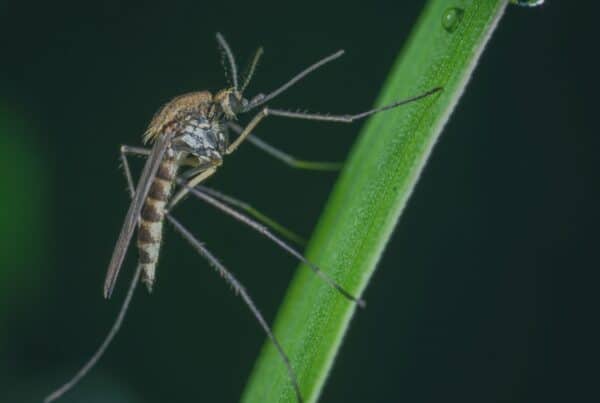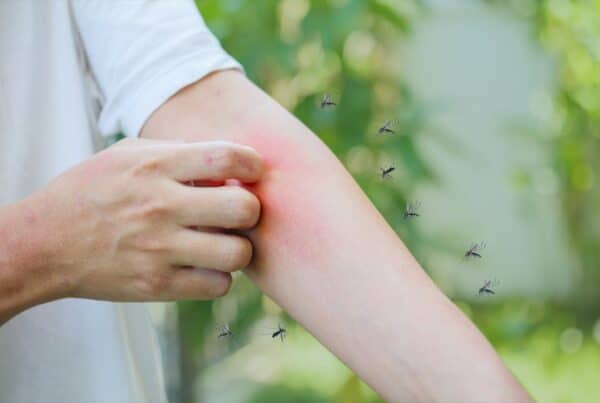

Mosquitoes are more than a nuisance. In Jacksonville and across Northeast Florida, mosquito-borne illnesses are one of the most significant public health and safety threats families face.
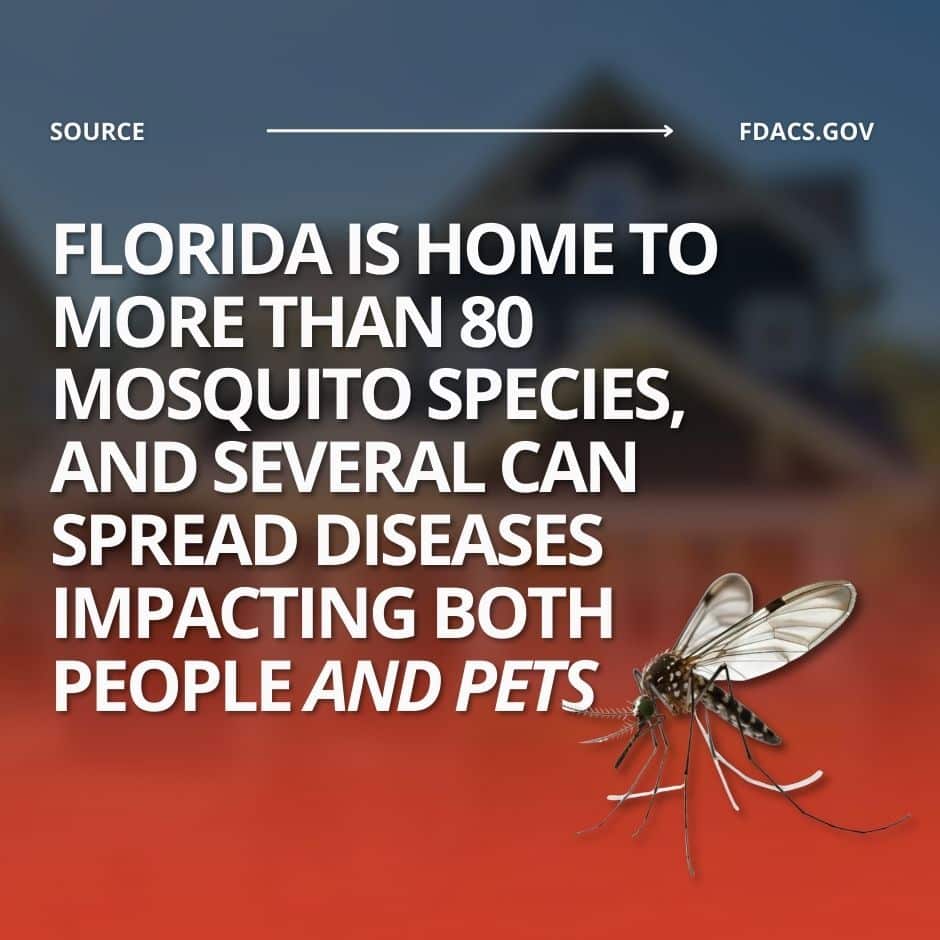
Florida is home to more than 80 mosquito species, and several spread diseases that affect both people and animals.
Understanding the real health risks mosquitoes pose is the first step toward protecting your household.
What Are the Mosquito-Borne Safety Risks in Florida?
Florida’s warm temperatures, high humidity, and abundant standing water allow mosquito populations to stay active most of the year.
Mosquitoes bite day and night, spreading diseases and infections that can cause serious illness in people and pets. After summer storms, populations spike fast, and the risk grows quickly.
Jacksonville families face a longer exposure window than most of the country. The health risks here are documented, ongoing, and relevant to anyone with children, elderly relatives, or pets spending time outdoors.
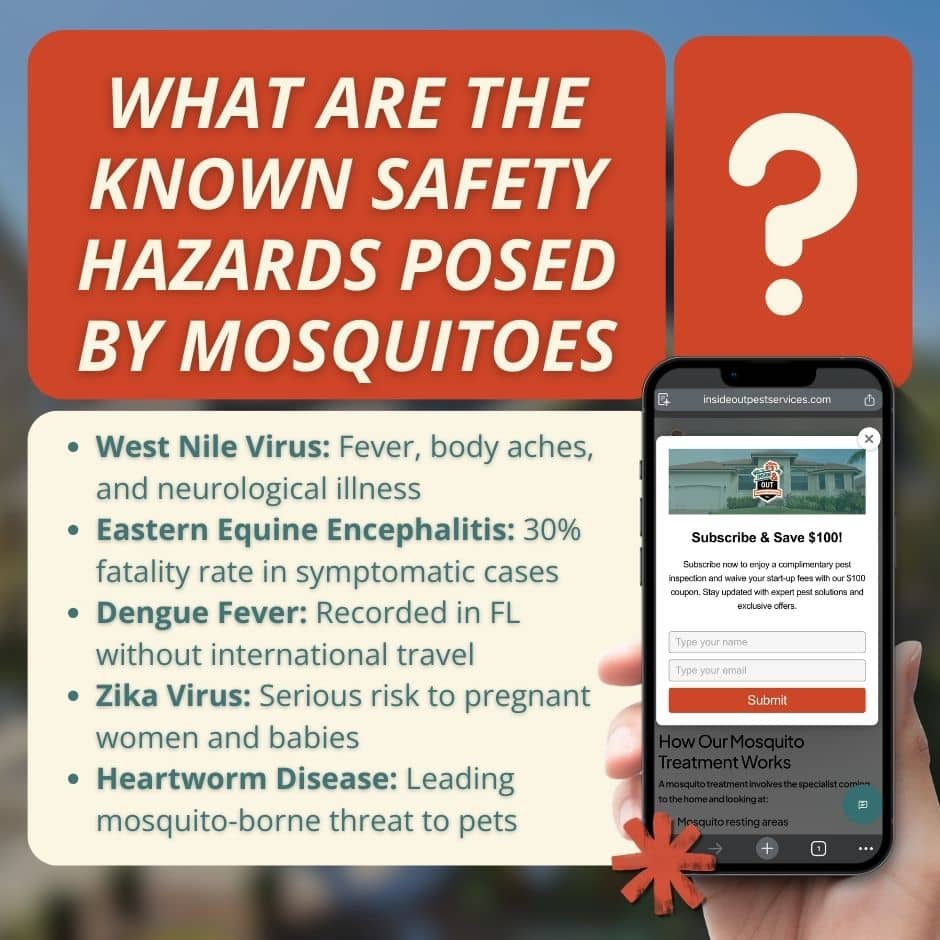
West Nile Virus
West Nile virus is the most commonly reported mosquito-borne disease in the U.S.
About one in five people infected develop fever, body aches, headaches, joint pain, or rash. In rare cases, it causes severe neurological illness. Older adults and immunocompromised individuals face the highest risk.
Eastern Equine Encephalitis (EEE)
EEE is rare but among the most dangerous mosquito-borne diseases in North America.
It causes brain inflammation, carries a fatality rate of roughly 30 percent in symptomatic cases, and often leaves survivors with lasting neurological damage.
Zika Virus
Zika is transmitted by Aedes aegypti mosquitoes, which are common in Florida.
Most adults experience mild symptoms, but Zika poses serious risks to pregnant or breastfeeding women and developing babies.
Dengue Fever
Dengue has been recorded in Florida with no international travel involved.
Symptoms include high fever, severe headache, joint and muscle pain, and rash. Severe dengue can be life-threatening.
St. Louis Encephalitis
St. Louis encephalitis has caused outbreaks in Florida historically. Most infections are mild, but serious neurological illness can occur in elderly individuals.
Malaria
Locally transmitted malaria cases have been recorded in Florida in recent years.
Though rare, travelers returning from regions where malaria is active should consult a healthcare provider about prevention.
Mosquito Health Risks for Pets
The risks do not stop with people. Pets that spend time outdoors are also vulnerable, and some mosquito-transmitted illnesses in animals are more serious than most pet owners realize.
Heartworm Disease
Heartworm is the most significant mosquito-borne threat to pets in Florida. When mosquitoes carrying heartworm larvae bite a dog or cat, larvae enter the bloodstream and grow into worms that settle in the heart, lungs, and blood vessels.
In dogs, heartworm causes coughing, fatigue, and eventually heart failure. In cats, there is no approved treatment. Florida’s year-round mosquito activity makes consistent heartworm prevention non-negotiable.
Other Risks to Outdoor Pets
Pets bitten repeatedly by mosquitoes can develop skin irritation, allergic reactions, and secondary infections from scratching bug bites. Horses are highly susceptible to West Nile virus and EEE.
Vaccines are available and should be discussed with a veterinarian.
Who Is Most Vulnerable to Mosquito Bites?
| Risk Group | Why the Risk Is Higher |
| Young children | Developing immune systems; more outdoor time at peak hours |
| Elderly adults | Higher risk of neurological complications |
| Pregnant and breastfeeding women | Zika poses direct risk to fetal development |
| Immunocompromised individuals | Harder to fight off infection once exposed |
| Babies under 2 months | Cannot use most insect repellents; need mosquito netting |
| Dogs and cats | Year-round heartworm exposure in FL |
| Horses and livestock | Highly susceptible to West Nile and EEE |
How to Prevent Mosquito Bites and Protect Your Family
You cannot eliminate every mosquito, but you can significantly reduce their numbers and limit contact with the right approach.
Use Insect Repellent on Exposed Skin
Use EPA-registered insect repellents with active ingredients like DEET, picaridin, or oil of lemon eucalyptus to protect against mosquitoes, ticks, and other insects.
Insect repellents with at least 20% DEET provide reliable protection time against mosquitoes and ticks. DEET and picaridin are the safest and most effective repellent options for anyone over two months of age.
Always follow label instructions and reapply repellent as directed. EPA-registered insect repellents are safe and effective even for pregnant and breastfeeding women.
The Environmental Protection Agency maintains a search tool to help find the right insect repellent based on protection time and active ingredients. If applying sunscreen, put sunscreen on first and apply repellent on top.
More Natural Options
For babies under 2 months, drape mosquito netting over their carrier, stroller, or car seat rather than applying repellent to skin. Cover strollers and baby carriers with netting during active mosquito hours.
For older children, apply repellent to your hands first, then onto the child’s exposed skin, avoiding their face and hands. After time outdoors, wash repellent off skin with soap and water.
Some families prefer natural repellents. Oil of lemon eucalyptus is EPA-registered and proven effective. Other natural repellents vary widely in protection time.
Using mosquito coils with active ingredients like metofluthrin can also help keep mosquitoes away from a specific outdoor area.
Wear Protective Clothing and Gear
Wear long-sleeved shirts, long pants, socks, and a hat outdoors, especially at dawn and dusk. Choose loose-fitting, light-colored clothing and gear, as mosquitoes are attracted to dark fabrics against the skin.
Treat clothing and gear with 0.5% permethrin for added protection against mosquitoes, ticks, and other insects. Never apply permethrin directly on skin.
Using insect repellent on exposed skin and permethrin-treated clothing together provides the strongest defense against bites.
Eliminate Standing Water and Breeding Sites
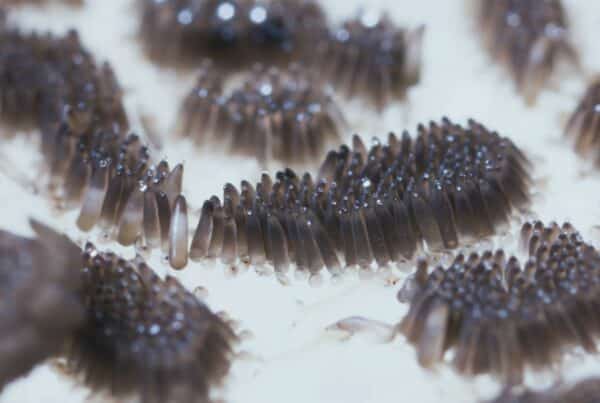
Mosquitoes lay 100 to 400 eggs at a time in still water and can go from egg to adult in 10 to 14 days.
- Empty bird baths, flower pot saucers, gutters, and rain barrels after every rain
- Inspect and empty tarps, outdoor toys, and anything that collects water
- Keep pools properly treated and circulating
- Fix yard drainage issues that cause water to pool regularly
Reduce Mosquitoes Around Your Home
- Trim foliage and mow grass to reduce resting spots for mosquitoes and insects
- Fix holes in window and door screens to keep mosquitoes and insects out indoors
- Use fans on patios, since mosquitoes are weak fliers and struggle in moving air
- Replace standard outdoor lights with yellow bug lights to reduce insect attraction at night
Why Professional Mosquito Control Makes a Difference
Personal prevention addresses what you can control on your property. But mosquitoes travel in daily from neighboring yards, drainage ditches, and natural wetlands.
In Jacksonville, proximity to the St. Johns River and coastal marshes creates a constant outside source that backyard management alone cannot overcome.
Professional barrier treatments kill adult mosquitoes on contact and protect your yard between visits. Larvicide treatments stop the next generation in standing water that cannot be drained.
For families with young children, babies, pregnant women, or pets with regular outdoor access, professional mosquito control provides a level of protection that insect repellent and personal prevention alone cannot match.
Other Questions to Explore
Do the same conditions that attract mosquitoes also attract other pests?
Yes. Standing water, moisture, and overgrown vegetation invite termites, rodents, and other insects alongside mosquitoes. Addressing these conditions reduces risk across multiple pest categories at once.
Can mosquitoes get inside even with screens?
Yes, if screens have tears, gaps, or worn door seals. Fixing holes in window and door screens is one of the most effective steps to keep mosquitoes and insects out of your living space indoors.
How does professional mosquito control work?
A technician identifies resting and breeding areas, then applies targeted treatments to shrubs, ground cover, tree lines, and standing water. Recurring service keeps mosquito populations low and protects your family and pets through the active season.
How do mosquito risks connect to general pest control?
The moisture, standing water, and vegetation that support mosquitoes also attract termites and rodents. A comprehensive pest control plan that addresses outdoor conditions protects your home from a wider range of insects and pests.
When to Call a Professional
Inside & Out Pest Services helps Jacksonville families stay protected with:
- Mosquito Control: Recurring barrier treatments that reduce adult populations and protect your yard through the season
- Pest Control: Comprehensive service for the full range of household insects and pests in NE Florida
- Termite Inspection and Treatment: The same wet conditions that support mosquitoes also attract termites
- Rodent Control: Year-round exclusion and treatment for homes with rodent pressure
We serve Jacksonville, Orange Park, St. Augustine, Ponte Vedra Beach, Fleming Island, St. Johns, and communities throughout Northeast Florida.
Conclusion
Mosquito populations are not just a nuisance in Jacksonville, but a real safety risk to your family and your pets, from heartworm in dogs and cats to serious diseases in people. The consequences go well beyond itchy bug bites.
Using EPA-registered insect repellents on exposed skin, wearing long-sleeved shirts, long pants, and permethrin-treated clothing and gear, eliminating standing water, and investing in professional mosquito control combine to create meaningful protection for everyone in your household, indoors and out.
Get in touch today to book preventative mosquito control or treat existing populations.