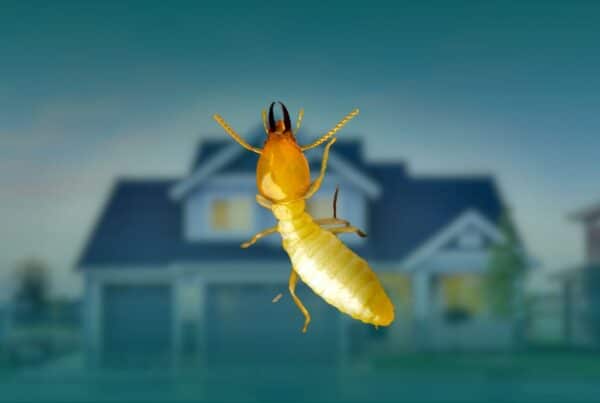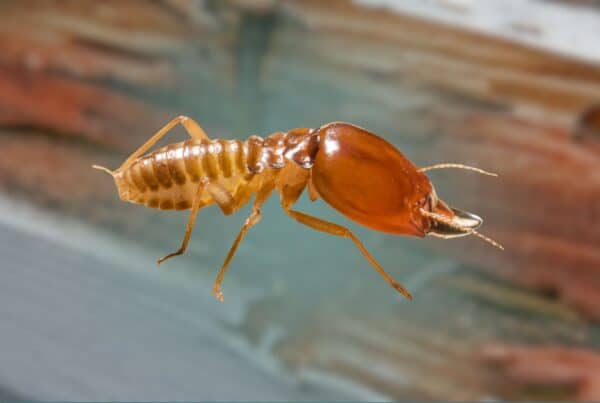

Most homeowners forget their termite stations are there. They’re flush with the ground, tucked into the mulch, and they don’t look like much. But every one of them is a small early-warning post, and the only way it helps is if someone opens it up and looks.
Here’s what that looks like on a real job, and what’s going on underground between visits.
Termites found this one first
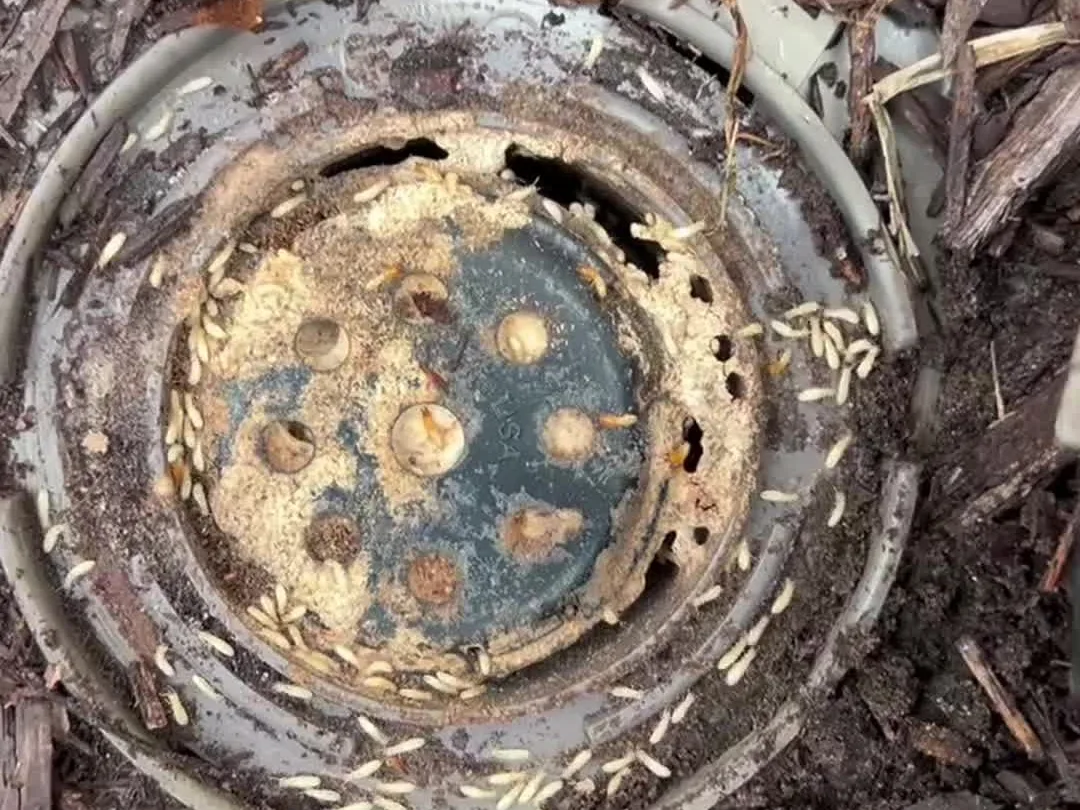
This station sits in a mulch bed next to a home. When our technician opened the cap, termites were all over the top of the bait. Nobody in the house had seen a single termite. No swarmers, no mud tubes, no damage. The station found them first.
That’s the whole point. Subterranean termites live in the soil and forage underground looking for wood. A station gives them something to find before they find your house.
What a station check looks like
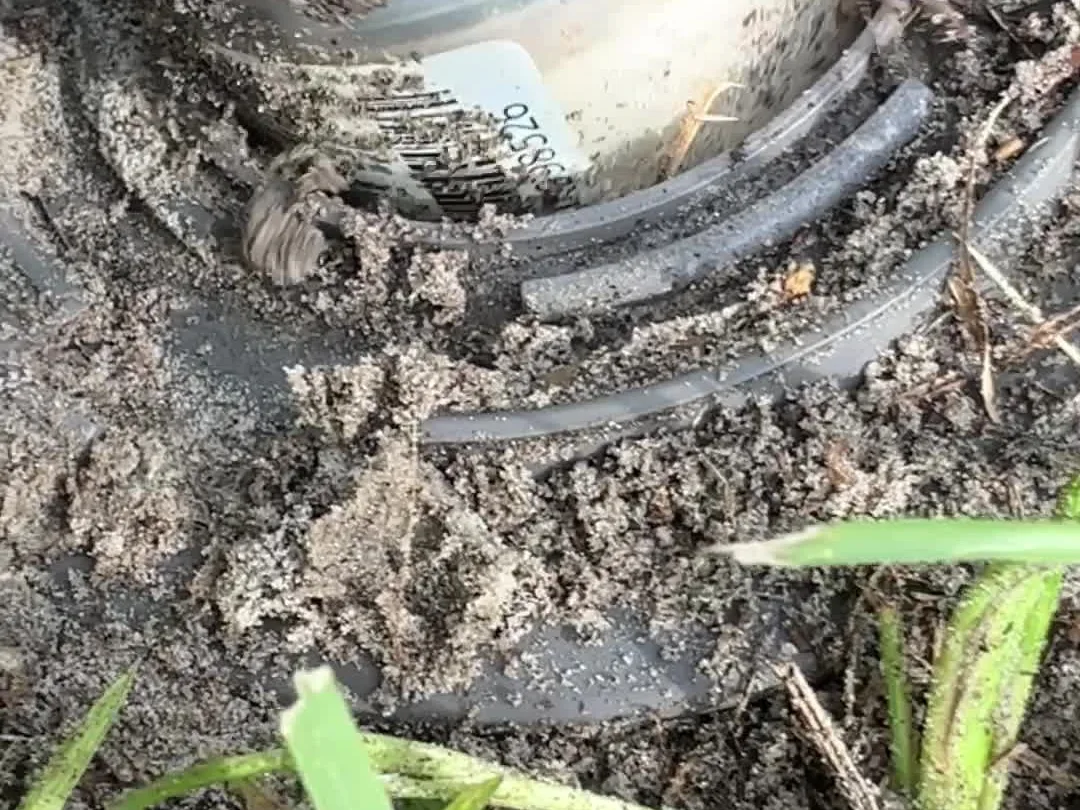
On a check, we unlock the cap, pull the bait cartridge and look for termites, feeding and tunneling. We note what we find at each station, then put it back so the termites aren’t scared off. If a cartridge has been eaten down, we replace it.
How the bait works
We use BASF’s Trelona termite bait system. Termites that find the station feed on the bait and carry it back to the colony, where they share it with their nestmates. The active ingredient, novaluron, stops termites from molting, so over time the colony dies off (BASF, Trelona ATBS homeowner brochure).
Two things surprise people:
- Bait doesn’t lure termites in. Termites find stations while foraging on their own, which is why stations go in a ring around the home (UF/IFAS Extension, Termite Baits).
- It isn’t instant. UF/IFAS notes baits can take several weeks to several months to work, sometimes longer (UF/IFAS). That’s normal. It’s working on the whole colony, not just the termites you see.
Monitoring keeps going after activity stops, in case a new colony moves in (UF/IFAS). We inspect every station at least once a year.
Help your stations do their job
A few things homeowners can do between visits:
- Leave the caps visible. Don’t bury them under fresh mulch, pavers or sod. If we can’t find a station, we can’t check it.
- Don’t move or pull stations, even if they’re in the way of a new flower bed. Call us and we’ll relocate them.
- Watch for other warning signs like mud tubes on the foundation or piles of wings by windows and doors. Our post on subterranean vs drywood termites shows what to look for.
- Keep wood off the ground near the house: firewood, scrap lumber and old landscape timbers.
In Northeast Florida, subterranean termites are active year-round, and swarm season builds in late winter and spring. Now is a good time to make sure your stations are in place and being checked.
Related reading
- How Long Does Termite Treatment Last?
- Termite Prevention Treatment Must-Knows for FL Homes
- How Do Termite Colonies Create Mud Tunnels?
- Identifying Termite Frass and Other Infestation Signs
Have stations and not sure anyone’s checking them?
Inside & Out Pest Services handles termite treatment and termite inspections across Duval and St. Johns County, including Jacksonville, Jacksonville Beach, Ponte Vedra Beach and St. Augustine. Get a Quote or call us at 904-878-0089.