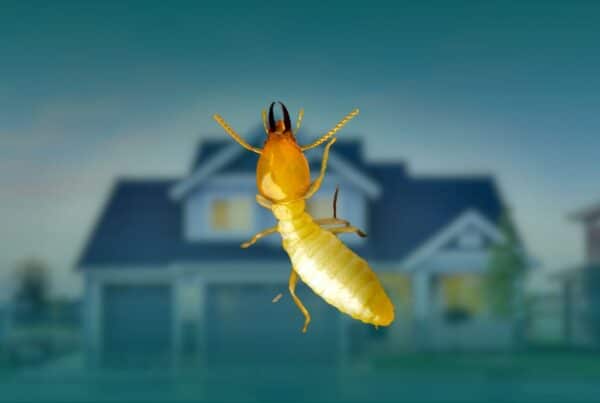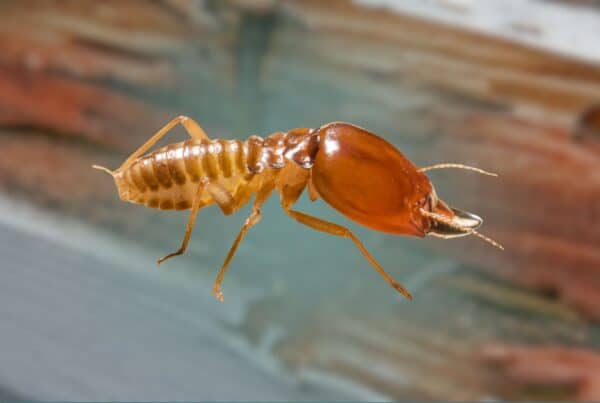

When someone calls us about termites, the first thing we want to know isn’t how bad it is. It’s which termite it is. In Jacksonville and St. Johns County we deal with two main kinds in homes: subterranean termites and drywood termites. They live differently, leave different clues, and need different treatment.
Here’s how to tell them apart, using photos from jobs our team has done around Jacksonville and St. Augustine.
Subterranean termites: the mud builders
Subterranean termites nest in the soil and need moisture to survive. To reach the wood in your house, they build mud tubes, usually about 1/4 to 1 inch wide, up foundations, block walls and framing (UF/IFAS, Subterranean Termites). The tubes keep them from drying out on the way.


What to look for:
- Mud tubes on block, slab edges, garage walls, around pipes and up framing.
- Wood eaten along the grain, sometimes leaving just a thin outer layer that sounds hollow when tapped.
- Live termites in the mud when a tube is broken open. They’re pale and soft-bodied.

Subterranean termites don’t push droppings out of the wood. They use that material to build their tunnels instead (UF/IFAS). So if you see mud, think subterranean.
The Florida Department of Agriculture and Consumer Services notes that subterranean termites, including Formosan and Eastern subterranean termites, are found throughout Florida (FDACS).
Drywood termites: the pellet pushers
Drywood termites live entirely inside the wood they eat. They never touch the soil, so there are no mud tubes. Instead, they push their droppings out through tiny “kick-out” holes about the size of a pencil tip. Those droppings, called frass, are hard, six-sided pellets that pile up below the infested wood and can look like sawdust or coffee grounds (UF/IFAS, Drywood and Dampwood Termites).


What to look for:
- Small piles of gritty pellets on floors, windowsills or in the attic, often coming back after you sweep.
- Tiny round holes in trim, rafters or furniture.
- Wood that sounds hollow or papery when tapped.
Swarmers and wings
Both kinds swarm, and the winged termites (alates) can look similar to a homeowner. Finding swarmers or piles of shed wings inside, especially near windows and lights, means it’s time for an inspection either way. Our post on termites with wings and termites vs. flying ants covers how to tell them apart.

Why the type changes the treatment
This is the part that matters most. UF/IFAS puts it simply: correct identification is extremely important because termite baits only work against subterranean termites (UF/IFAS, Termite Baits).
For subterranean termites, we use the Trelona® bait system from BASF, which targets the whole colony, and liquid Termidor® treatments where they fit the home. Drywood termites live in the wood itself, so a bait station in the yard won’t reach them; the treatment is chosen after we see where the colony is and how far it has spread. You can read more on our termite treatment page.
That’s why we always start with a termite inspection before recommending anything.
Quick comparison
| Subterranean | Drywood | |
|---|---|---|
| Where they live | In the soil | Inside the wood |
| Main sign | Mud tubes | Six-sided pellets (frass) |
| Wood damage | Along the grain, packed with mud | Smooth tunnels, clean of mud |
| Bait systems like Trelona | Yes | No |
How to lower your risk
UF/IFAS and FDACS both point to moisture and wood-to-soil contact as the big risks for subterranean termites (UF/IFAS, Termite Prevention and Control; FDACS):
- Fix leaks and send A/C drain lines and gutters away from the house.
- Point sprinklers away from the walls.
- Keep mulch and soil pulled back from siding and stucco.
- Don’t stack firewood or lumber against the house.
And get an inspection every year.
Related reading
- Drywood Termites: Spotting Them and the Importance of Treatment
- Identifying Termite Frass and Other Infestation Signs
- How and Why Do Termite Colonies Create Mud Tunnels?
- How Does Termite Treatment Work and How Long Does It Last?
Seeing mud tubes or pellets?
Take a photo and reach out. Inside & Out Pest Services handles termite inspections and treatment across Jacksonville and St. Johns County, including St. Augustine. Call us at 904-878-0089.